PCB surface finish protects exposed copper pads and prepares the board for soldering, bonding, contact, or long-term storage.
The right finish depends on the board design, assembly process, component type, storage time, contact requirement, and cost target.
This guide compares common PCB surface finish types used in PCB fabrication and assembly:
- HASL / Lead-Free HASL
- ENIG
- OSP
- ENEPIG
- Immersion Silver
- Immersion Tin
- Hard Gold
- Soft Gold
- Gold Fingers / Selective Hard Gold
If your PCB or PCB Assembly projects design files are ready, ACE Electronics provides PCB fabrication service and turnkey PCBA manufacturing for prototype, small-batch, and production projects.
Quick Answer: Which PCB Surface Finish Should You Choose?
| Project requirement | Usually suitable finish |
|---|---|
| General SMT assembly with good flatness | ENIG |
| BGA, QFN, LGA, CSP, fine-pitch ICs | ENIG or ENEPIG |
| Cost-sensitive SMT assembled soon after fabrication | OSP |
| Simple through-hole or large-pad boards | HASL or Lead-Free HASL |
| Long storage or uncertain assembly timing | ENIG |
| RF or microwave boards | Immersion Silver or ENIG |
| Wire bonding or high-reliability advanced packages | ENEPIG |
| Edge connectors and gold fingers | Hard Gold / Selective Hard Gold |
| Special bonding or soft contact applications | Soft Gold |
| Press-fit or specific tin interface requirements | Immersion Tin |
For many OEM projects, ENIG is one of the safest default because it combines flatness, solderability, storage tolerance, and wide supplier availability.
OSP and HASL Lead Free are good choice when cost matters and assembly happens soon after fabrication.
ENEPIG, hard gold, soft gold, immersion silver, immersion tin should be selected for specific technical reasons.
What Is PCB Surface Finish?
A bare PCB has exposed copper pads. Copper oxidizes easily, so it needs a surface finish before assembly or use.
A PCB surface finish has four main jobs:
- Protect exposed copper before soldering
- Provide a solderable surface for SMT or through-hole assembly
- Support reliable contact, bonding, or special electrical requirements
- Help control shelf life, handling, and storage risk
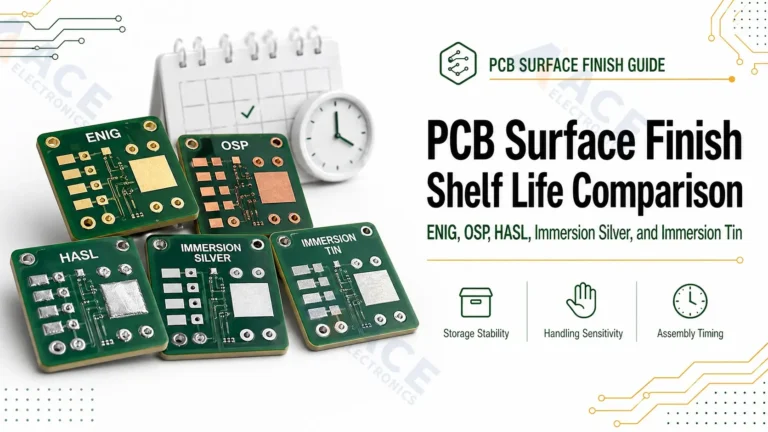
PCB Surface Finish Comparison Table
| Surface finish | Best use | Main advantage | Main limitation |
|---|---|---|---|
| HASL / Lead-Free HASL | Simple boards, through-hole, large pads | Good solderability and low cost | Uneven surface for fine-pitch SMT |
| ENIG | General SMT, BGA, fine-pitch, long storage | Flat, solderable, widely available | Higher cost than HASL or OSP |
| OSP | Fast-turn SMT, cost-sensitive production | Low cost and very flat | Shorter shelf life and tighter handling control |
| ENEPIG | Wire bonding, high reliability, advanced packages | Bondable and strong reliability margin | Higher cost and more specialized process |
| Immersion Silver | RF, microwave, high-speed, flat SMT pads | Good electrical performance | Sensitive to sulfur, humidity, and handling |
| Immersion Tin | Press-fit, tin interface, flat solderable pads | Flat surface and lead-free solderability | Storage and intermetallic growth need control |
| Hard Gold | Edge fingers, contacts, wear surfaces | Excellent wear resistance | Usually used selectively, not as a full-board SMT finish |
| Soft Gold | Bonding and special contact applications | High-purity gold surface | Higher cost and special design/process control |
| Gold Fingers | Card-edge connectors | Durable plug-in contact surface | Requires controlled bevel, plating, and keep-out design |
HASL / Lead-Free HASL
HASL means Hot Air Solder Leveling. The PCB is coated with solder, and hot air removes excess solder from the pads.
When to Choose HASL
- Pads are large enough to tolerate surface variation
- Cost control is important
- Fine-pitch SMT density is low
- The product does not require a very flat surface
Main Limitation
HASL is not very flat compared with ENIG, OSP, immersion silver, or immersion tin.
For BGA, QFN, LGA, CSP, 0201 passives, and fine-pitch ICs, HASL is not the good choice.
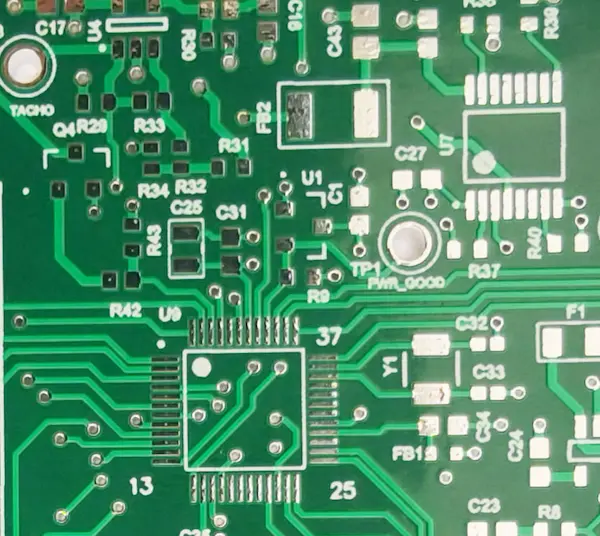 *A photo of HASL Lead Free PCB, produced by ACE Electronics
For one of our client - a Canadian HVAC manufacturer, producing residential heat-recovery ventilators (2023-2024 production run, n=50,000 units), HASL was specified for 2-layer control boards with 2.54mm pitch connectors and No BGA devices. The 3-year field failure rate: ≤0.3%, validating HASL Lead-Free as the correct economic choice for this non-critical, cost-sensitive application. Specifying ENIG would have increased material cost by $28,000 annually.
ENIG
ENIG stands for Electroless Nickel Immersion Gold.
It has two metallic layers over copper:
- Electroless nickel
- Immersion gold
The nickel layer provides the main solderable barrier. The thin gold layer protects the nickel before soldering.
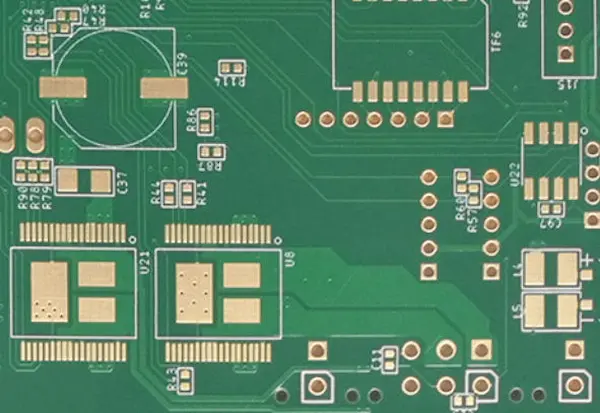 *A close-up photo of ENIG Surface finish PCB, produced for a underwater robot company in Canada, by ACE Electronics
When to Choose ENIG
- The board has BGA, QFN, LGA, CSP, or fine-pitch SMT
- The assembly schedule is not confirmed
- The PCB needs better shelf life
- The product needs reliable SMT assembly
ENIG is widely used for industrial electronics, communication products, medical devices, automotive electronics, IoT devices, and high-density PCBA projects.
For more detail, read What Is ENIG PCB Surface Finish.
Real Case: Smart Home Controller (2024-Q2)
- Customer: IoT Startup (NDA-protected), residential automation sector
- Board Spec: 6-layer FR-4, 1.6mm thickness, 0.8mm pitch BGA (TFBGA-256 package)
- Initial Specification: Lead-free HASL (cost-driven decision)
- Failure Mode: 28% functional test failure (28/100 units) due to BGA bad soldering.
- Root Cause Analysis: X-ray inspection revealed >25% voiding under BGA balls (IPC-A-610 Class 3 limit: 10% max). HASL surface variation (4-7μm) caused inconsistent solder paste deposit volume.
- solution: Re-soldered those 28PCS defective PCBA and functional tested them. In next production order, client decided to produce the PCB with ENIG (1.2 μin Au / 150 μin Ni per IPC-4552). Re-assembly yield: 99.2% first-pass.
- Total Cost Impact: Delayed launch 2 days; total recovery cost $1,400 vs. $1,200 additional ENIG cost initially.
Main Limitation
ENIG depends on plating process control. Poor ENIG plating can cause nickel corrosion or black pad risk. For that topic, see ENIG Black Pad and Phosphorus-Rich Layer.
OSP
OSP means Organic Solderability Preservative.
It is a thin organic coating applied over exposed copper. It protects copper before soldering and is removed during assembly.
When to Choose OSP
- Assembly will happen soon after fabrication
- Cost control is important
- The board needs a flat solderable surface
OSP is common in high-volume SMT production because it is low-cost, flat, and lead-free.
For more detail, read What Is OSP PCB Surface Finish.
Main Limitation
OSP gives less shelf time than ENIG or HASL. It should be used for assembly soon when the PCB production completed.
ENEPIG
ENEPIG stands for Electroless Nickel Electroless Palladium Immersion Gold.
It adds a palladium layer between nickel and gold:
Copper → Nickel → Palladium → Gold
The palladium layer improves bonding capability and helps protect the nickel layer.
When to Choose ENEPIG
- Wire bonding is required
- The product has high-reliability requirements
- The customer wants stronger protection against ENIG black pad risk
- The product is used in medical, aerospace, automotive, defense, or harsh industrial applications
For more detail, read What Is ENEPIG PCB Surface Finish.
For direct ENIG and ENEPIG selection, see ENIG vs ENEPIG PCB Surface Finish.
Main Limitation
ENEPIG costs more than ENIG and uses a more specialized plating process. It is usually chosen only for wire bonding, high-reliability products, or customer-specified requirements.
Immersion Silver
Immersion silver is a flat, lead-free metallic finish applied over copper.
It offers good solderability and good electrical performance, so it is often considered for RF, microwave, and high-speed boards.
When to Choose Immersion Silver
- RF or microwave performance matters
- The board needs a flat solderable surface
- The assembly date is predictable
- Storage materials are sulfur-free
Main Limitation
Immersion silver is sensitive to tarnish and contamination. Sulfur, chlorine, humidity, fingerprints, paper, cardboard, foam, and rubber materials can reduce solderability.
For RF applications, compare immersion silver with ENIG before production release.
Immersion Tin
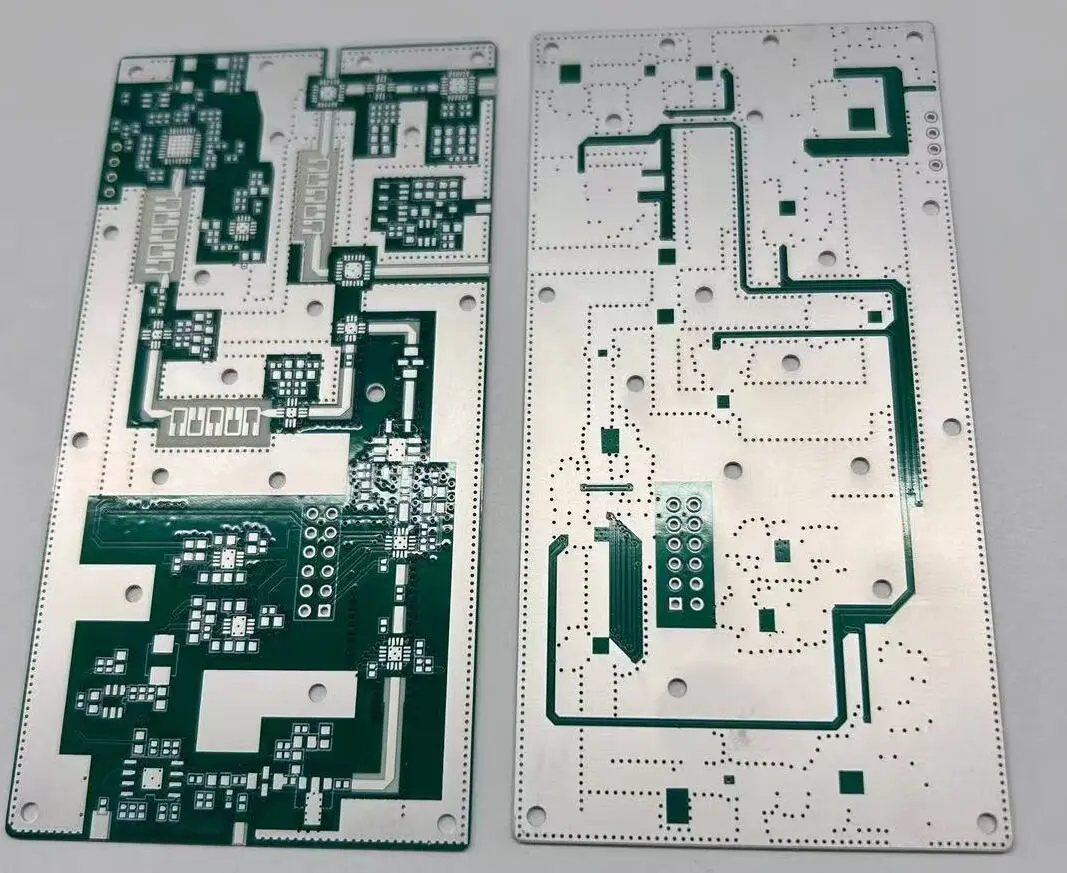
Immersion tin is a flat metallic finish applied directly over copper.
It provides a solderable tin surface and can be used for certain press-fit or tin-interface requirements.
When to Choose Immersion Tin
- The project has a specific tin requirement
- Press-fit behavior matters
- The assembly timing is controlled
- Incoming inspection is defined
- Reflow and rework count are limited
Main Limitation
Copper and tin interact over time. Copper-tin intermetallic growth can reduce the remaining solderable tin layer. Storage time, humidity, oxidation, and heat exposure should be controlled.
Hard Gold
Hard gold is electroplated gold with additives that improve wear resistance.
It is usually used for contact surfaces, not as a full-board solderable finish. For example, Gold Fingers.
Choose Hard Gold When
- The PCB has edge fingers
- The contact area will be inserted or removed repeatedly
- Wear resistance matters
- The contact surface needs stable electrical performance over repeated use
Hard gold is common for:
- PCIe edge connectors
- Memory module fingers
- Card-edge connectors
- Test contacts
- Sliding or mating contact areas
For more detail, read What Is Hard Gold PCB Surface Finish.
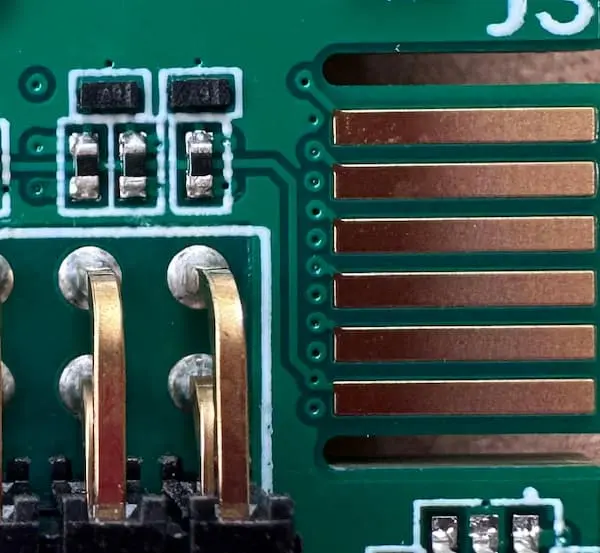 *Photo of hard gold surface finish PCB, produced by ACE Electronics
Main Limitation
Hard gold is not usually selected for full-board SMT soldering. It is normally applied selectively to contact areas.
Soft Gold
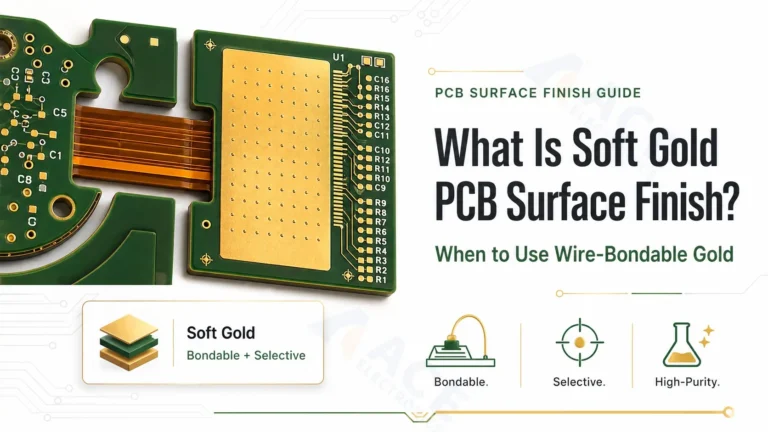
Soft gold is high-purity electroplated gold. It is softer than hard gold and is used for bonding or special contact applications.
Choose Soft Gold When
- Wire bonding or special bonding is required
- The contact surface needs high-purity gold
- The application needs a soft, clean gold surface
- The supplier confirms the plating process matches the assembly requirement
Main Limitation
Soft gold is more expensive than general solderable finishes. It also requires clear pad design, plating notes, and communication with the fabricator.
Use soft gold only when the bonding or contact requirement calls for it.
How to Choose PCB Surface Finish by Project Requirement
For BGA and Fine-Pitch SMT
Choose ENIG for most BGA, QFN, LGA, CSP, and fine-pitch SMT boards.
ENIG provides a flat surface and good solderability. ENEPIG should be reviewed when the same board also needs wire bonding, higher reliability margin, or advanced packaging support.
For package-specific guidance, read Best PCB Surface Finish for BGA Assembly.
For Shelf Life and Storage
Choose ENIG when bare PCBs may wait before assembly.
OSP, immersion silver, and immersion tin can work well when storage and handling are controlled, but they need tighter process discipline.
For a detailed storage comparison, read PCB Surface Finish Shelf Life Comparison.
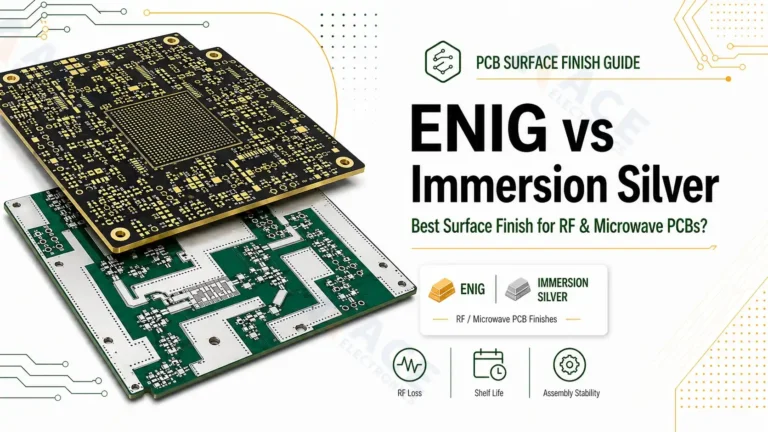
For RF and Microwave Boards
Review immersion silver and ENIG first.
Immersion silver can be attractive for RF and microwave designs because of its electrical performance and flatness. ENIG is often easier to manage when storage, handling, or logistics are less predictable.
For Edge Connectors
Use hard gold or selective hard gold for edge fingers and repeated contact areas.
ENIG, OSP, HASL, immersion silver, and immersion tin are solderable finishes. They are not the usual choice for repeated connector wear.
For Wire Bonding
Review ENEPIG or soft gold.
The right choice depends on bonding method, wire material, pad design, reliability requirement, and supplier capability.
For Cost-Sensitive SMT
Use OSP when assembly happens soon after fabrication.
Use HASL or lead-free HASL for simple boards where flatness is not critical.
Use ENIG when the cost of assembly risk is higher than the finish cost difference.
What ACE Electronics Usually Recommends
At ACE Electronics, we review PCB surface finish together with the full manufacturing path:
- Gerber files
- Stackup
- Surface finish notes
- BGA and fine-pitch areas
- Hole type and mechanical requirements
- BOM readiness
- Component lead time
- Reflow count
- Storage time
- Packaging
- Assembly and test plan
For most OEM projects:
| Project type | Practical recommendation |
|---|---|
| Standard SMT with fine-pitch components | ENIG |
| Simple industrial board with large pads | HASL or lead-free HASL |
| Cost-sensitive SMT with fast assembly | OSP |
| BGA or high-density PCBA | ENIG |
| Wire bonding or advanced package | ENEPIG or soft gold |
| Edge connector | Selective hard gold |
| RF or microwave board | Immersion silver or ENIG |
| Press-fit or tin-interface project | Immersion tin |
| Keypad contact board | Carbon ink or hard gold, depending on wear requirement |
The best finish is the one that matches the design, assembly process, storage time, and end-use requirement.
If you are preparing a new project, ACE can review the surface finish together with your fabrication files before production. Start with PCB fabrication service or use turnkey PCBA manufacturing when component sourcing, SMT assembly, testing, and shipment need to be managed together.
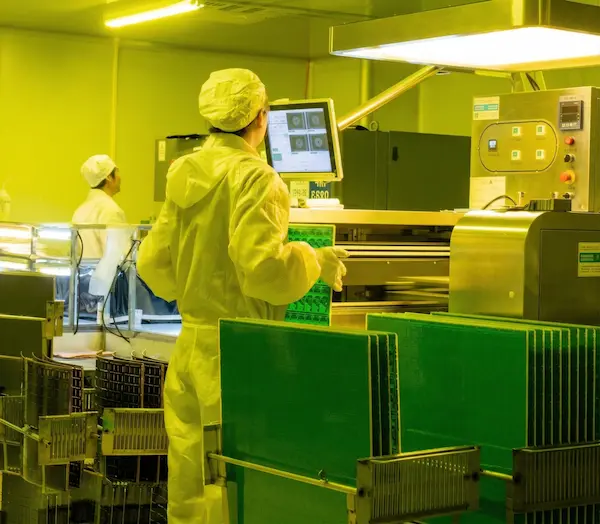 *Photo of ACE Electronics' PCB fabrication Workshop
Final Recommendation
Use this simple rule:
- Choose ENIG for most fine-pitch SMT, BGA, and general OEM projects.
- Choose OSP when cost matters and assembly happens soon after fabrication.
- Choose HASL for simple boards where pad flatness is not critical.
- Choose ENEPIG when wire bonding or high-reliability margin is required.
- Choose Immersion Silver for RF or microwave boards with controlled storage.
- Choose Immersion Tin for specific tin-interface or press-fit requirements.
- Choose Hard Gold for gold fingers and wear contacts.
- Choose Soft Gold for special bonding or soft contact applications.
Frequently Asked Questions
What is PCB surface finish?
What is PCB surface finish?
PCB surface finish is the coating applied to exposed copper pads on a printed circuit board. It protects copper from oxidation and provides a surface for soldering, bonding, or electrical contact.
Which PCB surface finish is most common?
Which PCB surface finish is most common?
ENIG, HASL, lead-free HASL, and OSP are among the most common PCB surface finishes. ENIG is widely used for modern SMT boards with BGA, QFN, fine-pitch ICs, or higher reliability requirements.
What is the best PCB surface finish for SMT assembly?
What is the best PCB surface finish for SMT assembly?
ENIG is often the best general-purpose choice for SMT assembly because it is flat, solderable, lead-free, and suitable for fine-pitch components. OSP is also suitable when assembly happens soon after fabrication.
What is the best PCB surface finish for BGA?
What is the best PCB surface finish for BGA?
ENIG is usually the practical default for BGA assembly. ENEPIG should be reviewed when the board also needs wire bonding, advanced packaging support, or higher reliability margin.
Is OSP cheaper than ENIG?
Is OSP cheaper than ENIG?
Yes. OSP is usually cheaper than ENIG. It is a good option for cost-sensitive SMT boards when assembly timing and storage are controlled.
Is HASL still used?
Is HASL still used?
Yes. HASL and lead-free HASL are still used for simple boards, through-hole assemblies, and large-pad designs. They are less suitable for dense fine-pitch SMT because the surface is less flat than ENIG or OSP.
What is the difference between ENIG and hard gold?
What is the difference between ENIG and hard gold?
ENIG is a solderable surface finish for SMT assembly. Hard gold is a wear-resistant finish used for edge fingers, contact pads, and repeated mating surfaces.
When should I use ENEPIG?
When should I use ENEPIG?
Use ENEPIG when the PCB requires wire bonding, advanced packaging, stronger reliability margin, or better protection against nickel corrosion risk compared with standard ENIG.
What surface finish should I use for gold fingers?
What surface finish should I use for gold fingers?
Use hard gold or selective hard gold for gold fingers. The fabrication drawing should define the gold finger area, bevel, plating thickness, and keep-out requirements.
Which PCB surface finish has the best shelf life?
Which PCB surface finish has the best shelf life?
ENIG and HASL are generally easier to manage for longer storage than OSP, immersion silver, and immersion tin. The actual shelf life depends on packaging, humidity, handling, and supplier process control.
Can one PCB use more than one surface finish?
Can one PCB use more than one surface finish?
Yes. Some PCBs use selective surface finishes, such as ENIG on SMT pads and hard gold on edge fingers. This should be clearly shown in the fabrication drawing and Gerber notes.
About the Author
Bill Ho is Sales Engineer and Chief Editor at ACE Electronics, with 10 years of experience in PCB fabrication and PCB assembly.
He writes practical technical content focused on manufacturability review, fabrication communication, component sourcing, and assembly risk reduction for OEM electronics projects.