
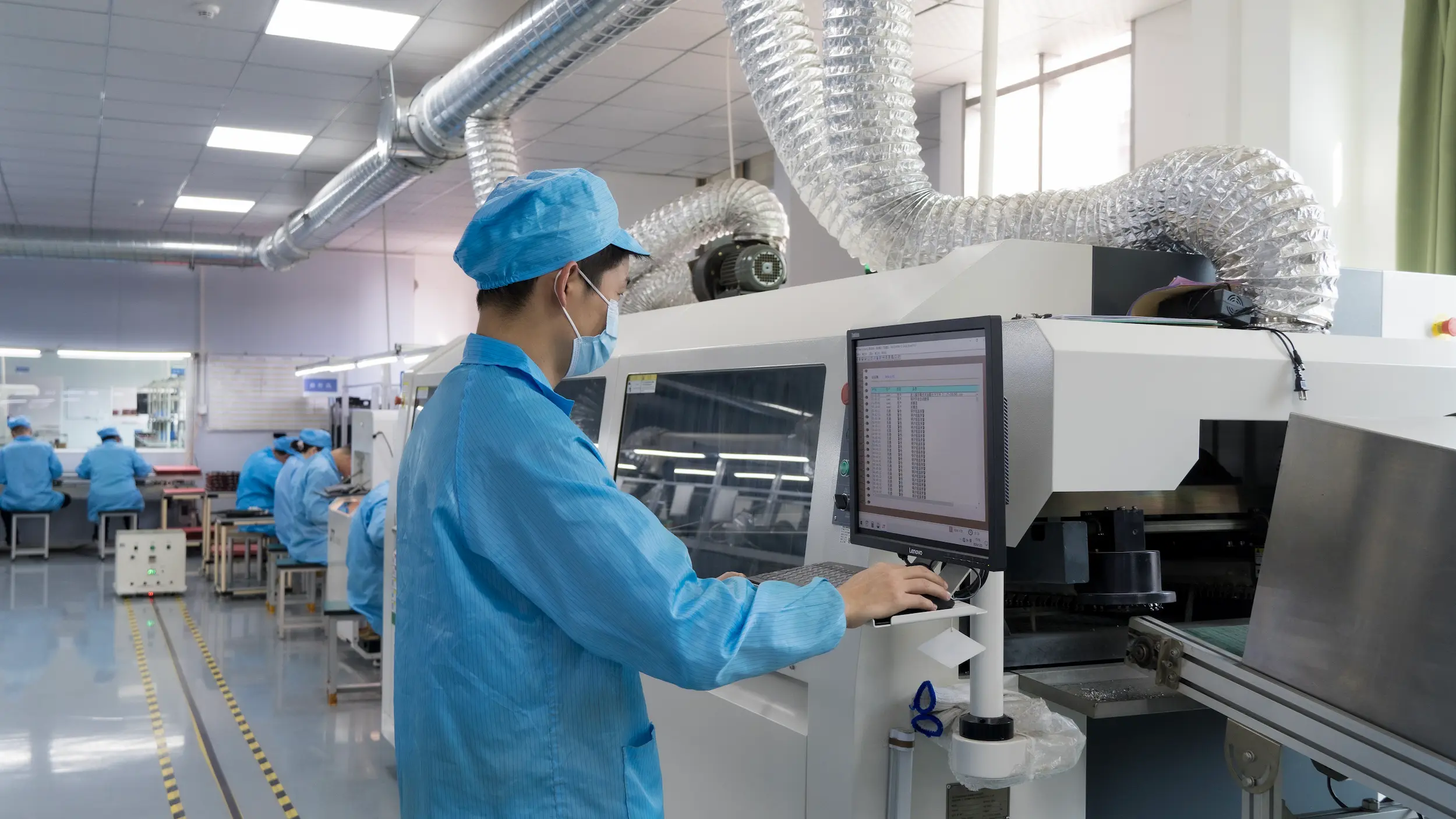
Reliable Through-Hole Assembly for Complex PCBs
From Selective Wave Soldering to Manual Assembly.
Expert handling of Heavy Copper, High-Voltage & Mixed-Technology boards.
Through-Hole PCB Assembly Capabilities
ACE Electronics supports THT PCB assembly for mixed-technology boards, power electronics and industrial controls where mechanical strength, solder joint quality and long-term reliability matter more than speed alone.
Selective Wave Soldering
For mixed-technology boards where thermal shock must be minimized. Precise nozzle control ensures perfect joints without damaging sensitive SMT components.
Hand Soldering
Certified IPC-A-610 technicians for connectors, transformers, and high-voltage components. Expert handling of large thermal mass parts requiring precise heat control.
Advanced Capabilities
- Press-fit connectors for vibration resistance on industrial PCBs
- High-mass thermal components (heatsinks, transformers) for Through-Hole PCBs
- Heavy copper PCBs (up to 12oz)
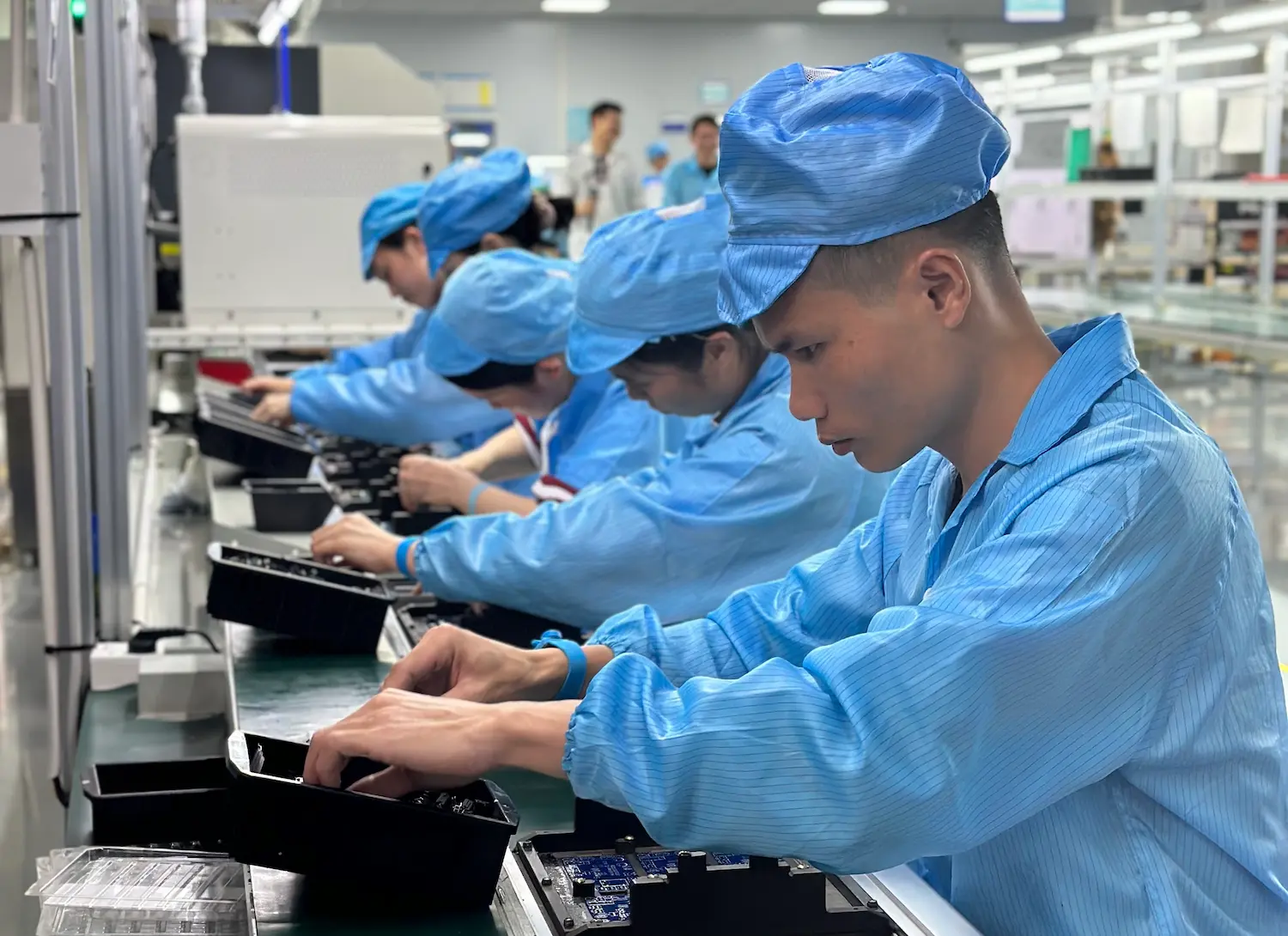
Manual, Wave, Selective and Press-Fit Assembly Compared
Through-hole PCB assembly is not one single process. We choose the soldering or press-fit route based on board density, nearby SMT parts, component mass, production volume and inspection requirements.
| Process | Best Fit | Typical Components | Key Controls |
|---|---|---|---|
| Manual soldering | Prototype builds, low-volume runs, rework, oversized or heat-sensitive parts. | Odd-form connectors, large capacitors, transformers, cables and mechanical terminals. | IPC-trained operators, controlled tip temperature, solder wetting, fillet shape and visual inspection. |
| Wave soldering | THT-dense boards where many leads can be soldered in one stable pass. | DIP parts, headers, relays, axial/radial components and repeated connector groups. | Flux coverage, preheat profile, conveyor angle, solder pot condition, bridging and barrel fill review. |
| Selective soldering | Mixed SMT + THT assemblies where local heat control is needed around sensitive SMT areas. | Power connectors, terminal blocks, relays and THT parts placed near fine-pitch SMT components. | Nozzle path, dwell time, keep-out areas, thermal balance and solder joint consistency. |
| Press-fit assembly | High-pin-count connectors or vibration-sensitive products where solderless mechanical retention is preferred. | Backplane connectors, industrial I/O connectors and automotive-style press-fit terminals. | Finished hole tolerance, insertion force, seating depth, pin damage check and continuity testing. |
Built for Heavy, High-Stress and High-Current Parts
THT assembly is still the better choice when components must survive vibration, connector pull force, high current, thermal cycling or field maintenance. We review part weight, lead geometry, hole size, solderability and inspection access before production.
Connectors
Headers, terminal blocks, I/O connectors and edge connectors that need mechanical retention and clean solder fillets.
Transformers
High-mass magnetic components requiring controlled preheat, stable insertion and enough heat transfer for full wetting.
Relays
Power relays and safety-related switching parts where pin seating, polarity and solder joint integrity are checked before shipment.
Large Capacitors
Radial electrolytic capacitors and high-profile parts with lead forming, polarity control and vibration-sensitive mounting checks.
High-Current Terminals
Screw terminals, bus-bar interfaces and power-entry parts reviewed for copper weight, hole-to-lead clearance, barrel fill, heat rise risk and final electrical testing.
High-Voltage Industrial Controls System
Handling high-voltage industrial controls requires perfect solder fillets to prevent arcing. We successfully assemble 10+ layer PCBs for European motor control systems.
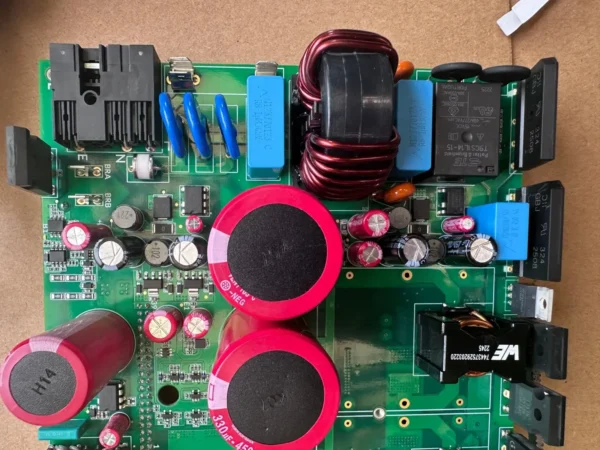
Project Details
- Client
- Italian Design House
- Industry
- Industrial Automation
- PCB Layers
- 10+ Layers
- Voltage Rating
- High-Voltage
Key Challenges
- Perfect solder fillets required to prevent electrical arcing
- Heavy copper PCBs requiring precise thermal management
- Sourcing original EU/US components with full traceability
"ACE Electronics through-hole expertise ensured zero field failures in our high-voltage motor controllers. Their attention to solder joint quality is unmatched."-- Hardware R&D Lead, Italian Motor Control Systems
Acceptance Standards for THT Solder Joints
We align inspection to IPC-A-610 workmanship criteria, J-STD-001 soldering process requirements and your drawing or product class requirements. The goal is not only to pass visual inspection, but to reduce field risk on high-stress components.
What We Inspect
Barrel fill
Hole fill is checked against IPC-A-610 / J-STD-001 and customer class requirements. Critical terminals can receive additional review when current, heat or vibration risk is high.
Solder fillet shape
We look for proper wetting, smooth fillet formation and no cold joints, cracks, bridges, icicles or excess solder.
Component seating and polarity
Connectors, relays, capacitors and transformers are checked for orientation, seating, lead stress and mechanical stability.
Cleanliness and residue risk
For high-voltage or leakage-sensitive assemblies, flux residue and contamination controls are reviewed against the build requirement.
Evidence You Can Request
First article inspection
FAI can confirm component orientation, solder quality, workmanship class and drawing alignment before the lot continues.
Inspection photos
For critical THT joints, photo records can be added to the quality package when required by your project.
Functional test result
Power-on, communication, relay actuation, load or customer-defined functional checks can be linked to lot or serial records.
Traceability records
Lot ID, BOM revision, process route, inspection status and rework notes can be retained for industrial and automotive programs.
Other Services Available At ACE Electronics
From PCB fabrication to fully assembled products. Streamline your supply chain with our integrated manufacturing services.
PCB Assembly
SMT and THT assembly with 01005 component capability. Complete with AOI, X-ray inspection, and IC programming.
Explore PCBA ServicesParylene Coating
In-house CVD parylene coating for ultimate moisture and chemical protection. Ideal for medical devices and harsh environments.
Learn About Parylene CoatingBox Build Assembly
Complete electromechanical integration: enclosures, cable harnesses, PCB mounting, and functional testing to finished product.
View Box Build ServiceNeed a complete manufacturing partner?
Explore All Turnkey ServicesThrough-Hole Assembly FAQs
Q
Why use through-hole when SMT is more common?
Why use through-hole when SMT is more common?
Through-hole technology (THT) provides superior mechanical strength and thermal cycling resistance compared to SMT. It's essential for heavy components like transformers, large capacitors, and connectors that endure physical stress. THT also offers better heat dissipation and high-voltage isolation, making it mandatory for industrial power electronics, automotive engine controls, and aerospace applications where reliability is critical.
Q
Do you use automated insertion or manual soldering?
Do you use automated insertion or manual soldering?
We utilize axial and radial lead cutting/forming machines followed by automated component insertion (Axial/Radial Insertion Machines) for high-volume production. For prototypes, complex configurations, or oversized components, our certified technicians perform manual insertion followed by selective wave soldering or robotic soldering. All PTH joints are inspected under AOI (Automated Optical Inspection) and sampled for X-ray analysis on multilayer boards.
Q
How do you ensure solder joint reliability for PTH components?
How do you ensure solder joint reliability for PTH components?
We follow IPC-A-610 Class 2 or Class 3 standards for through-hole solder joints. Key controls include: (1) Lead forming to prevent stress on component bodies; (2) Precise hole-to-lead ratios (typically 0.2-0.4mm clearance); (3) Wave solder profiling with preheating to prevent thermal shock; (4) 100% visual inspection for barrel fill (minimum 75% for Class 2, 100% for Class 3); and (5) Solderability testing per IPC-J-STD-002 to ensure proper wetting.
Q
Can you handle mixed THT and SMT on the same PCB?
Can you handle mixed THT and SMT on the same PCB?
Absolutely. We specialize in mixed-technology assembly. The standard process flow is: (1) SMT reflow on the primary side; (2) SMT reflow on the secondary side (if double-sided); (3) THT component insertion; (4) Selective wave soldering or hand soldering for through-hole parts. For sensitive SMT components on the secondary side, we use selective soldering pallets or masking to protect existing components during the wave solder process.
Q
What about component lead preparation and forming?
What about component lead preparation and forming?
We provide automated lead forming and cutting services to ensure consistent standoff heights and stress relief. Axial components are formed with specific bend radii (typically 1x lead diameter minimum) to prevent cracking. For radial components, we maintain proper spacing to avoid solder bridging. All forming tools are customized per component specification to ensure leads insert smoothly without damaging plated through-holes or causing pad lifting.
Q
How do you handle high-heat or high-current through-hole components?
How do you handle high-heat or high-current through-hole components?
For high-current applications, we use heavy copper PCBs (2oz to 6oz) and ensure full barrel fill for maximum current carrying capacity. High-heat components receive thermal relief patterns in the copper planes to prevent soldering difficulties. We also employ press-fit connectors where soldering heat could damage sensitive terminals, and use high-temperature solder alloys (SAC305 or Sn95/Sb5) for components operating above 125°C ambient temperature.
Q
How do you choose between wave soldering and selective soldering?
How do you choose between wave soldering and selective soldering?
Wave soldering is usually better for THT-dense boards and stable production runs. Selective soldering is preferred for mixed SMT and through-hole PCB assembly, especially when THT pins sit close to heat-sensitive SMT components or when only a few local joints need soldering.
Q
What files help you quote a THT PCB assembly project accurately?
What files help you quote a THT PCB assembly project accurately?
Please send Gerber files, BOM, assembly drawings, polarity notes, special soldering requirements, inspection class, test procedure and any high-voltage, high-current or mechanical retention requirements. These details help us choose manual soldering, wave soldering, selective soldering or press-fit assembly correctly.
Start Your Projects Manufacturing Today!
Whether you need a quick quote or technical consultation, we're here to help.
Quick Response via WhatsApp
Get instant answers to your questions
Connect directly with our technical team for immediate assistance.
We typically respond within 30 minutes during business hours.
Business Hours: Mon-Fri 9:00-18:00 (GMT+8)