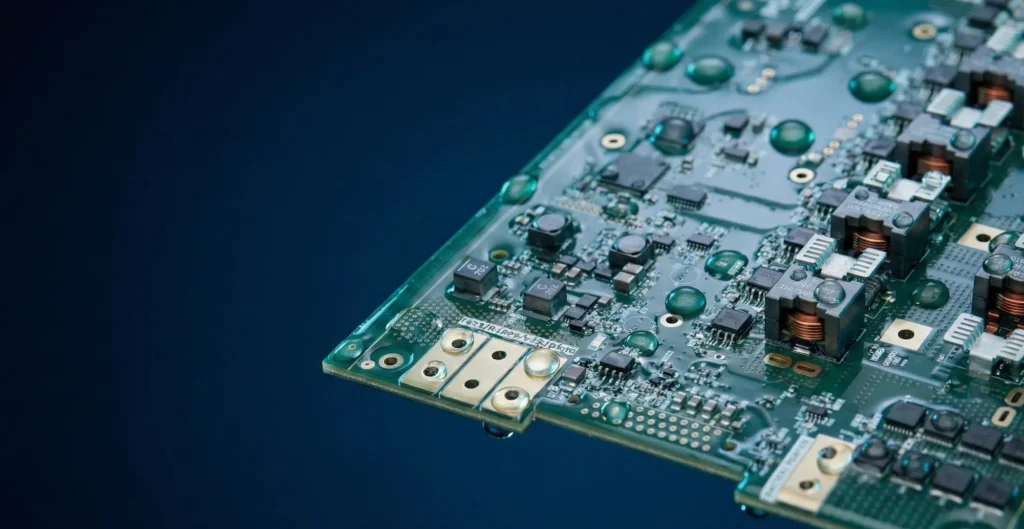
PCB conformal coating is a thin protective film applied to an assembled and tested circuit board. It helps protect the PCBA from moisture, dust, corrosion, chemical mist, and electrical leakage in the field.
For buyers and hardware teams, your decision comes down to material, process, testing, masking, and inspection. Each choice affects protection, production cost, and rework difficulty.
Use this guide to choose and specify conformal coating for your PCBA order without turning the project into a repair or assembly problem later.
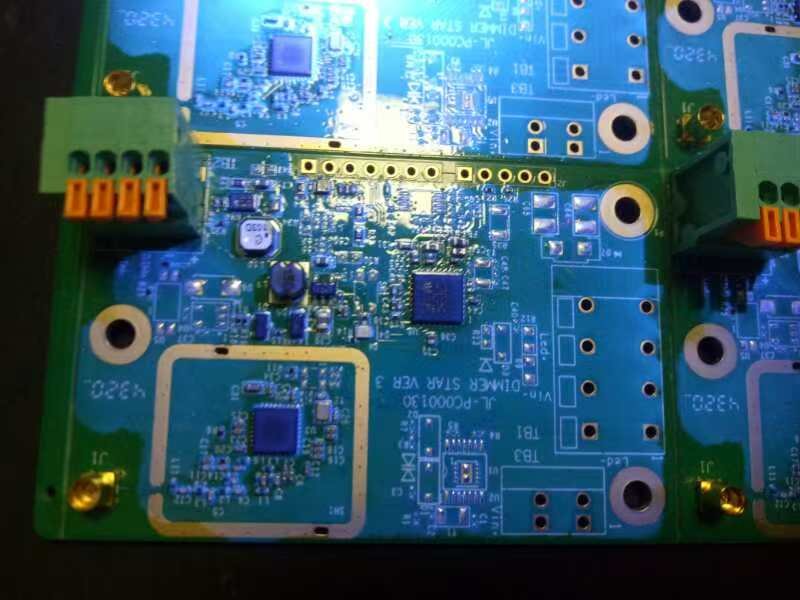
Conformal coating adds a thin protective film after assembly and electrical verification.
What Is Conformal Coating for PCB Assembly?
Conformal coating for electronics is a polymer film that follows the shape of the board, components, solder joints, and exposed conductors. The film is usually thin, so it protects the PCBA without adding the bulk of a full encapsulation or potting process.
Do not treat coating as a fix for every reliability problem. If the board is dirty, the connector layout is unclear, or the enclosure cannot keep out water, coating will not solve the root issue. It can even trap contamination under the film or cover areas that must stay exposed.
In a PCBA production run, coating usually comes after assembly, inspection, firmware loading if required, and functional testing. The detailed process matters because coating can make later repair slower and more expensive.
When Should a PCBA Use Conformal Coating?
Use conformal coating when the board will face moisture, condensation, dust, chemical mist, salt air, vibration, or long field exposure.
Common use cases include:
- Outdoor monitoring equipment
- Industrial controls
- Transportation electronics
- Agricultural sensors
- Energy and power monitoring devices
- Communication equipment exposed to humidity
- Payment terminals or access devices used in variable indoor environments
- Electronics installed near dust, condensation, salt air, chemical mist, or vibration
Start with your operating environment. A board used in a clean, dry indoor device may not need coating. A board installed in a humid enclosure, near motors, in a vehicle, or inside outdoor equipment may need it even if the electrical design is otherwise stable.
Coating adds extra lead time for cleaning, masking, curing, inspection and handling. It is cost-effective overall — one field return costs far more than protecting PCBA during manufacturing.
Be precise about the protection target. A conformal film can improve moisture and contamination resistance, but it does not automatically make your product waterproof. If your product must survive water immersion, pressure washing, long-term outdoor exposure, or heavy mechanical shock, the protection plan may also need potting, gasketed enclosure design, or final product assembly controls.
Main Types of PCB Conformal Coating
Different conformal coating types solve different production and reliability problems. The best material depends on the environment, temperature range, inspection needs, rework expectations, and production volume.
| Coating type | Strengths | Limitations | Typical PCBA use | Rework difficulty |
|---|---|---|---|---|
| Acrylic | Cost-effective, fast drying, easy to inspect and rework | Lower resistance to solvents and harsh chemicals | Consumer electronics, indoor controls, payment devices, general board protection | Low |
| Silicone | Flexible, good for high temperature and vibration | Can be softer and harder to handle in some processes | Automotive, transportation, high-temperature or vibration-prone electronics | Medium-high |
| Urethane / polyurethane | Strong moisture, abrasion, and chemical resistance | Slower cure in some systems; difficult rework | Industrial controls, outdoor devices, chemical exposure, rugged products | High |
| UV-curable | Very fast curing and good production throughput | Shadowed areas may need process control or secondary cure | Higher-volume production where speed and consistency matter | Medium-high |
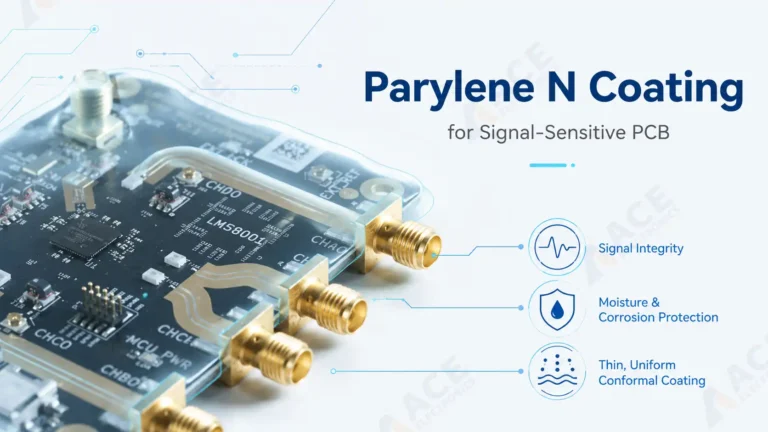
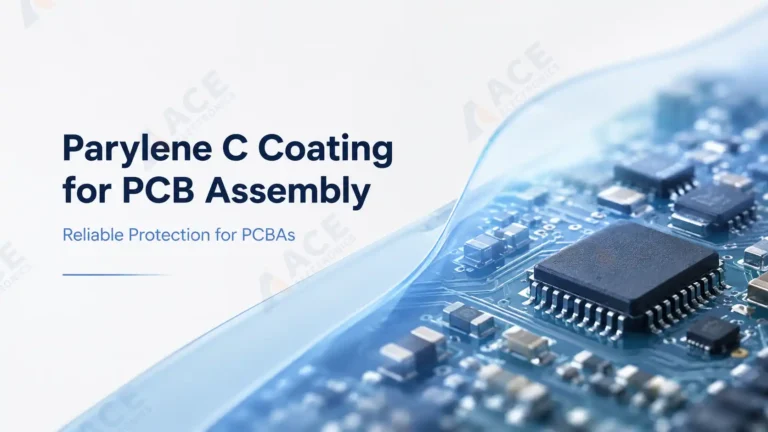
| Parylene | Very uniform vapor-deposited coverage and strong barrier performance | Specialized process, masking sensitivity, higher cost | High-reliability, fine-pitch, medical, aerospace, or demanding industrial electronics | High |
If you are already comparing specific materials rather than the overall category, these focused guides can help narrow the choice: acrylic conformal coating for PCB assembly, silicone conformal coating for PCB assembly, and urethane conformal coating for PCB assembly.
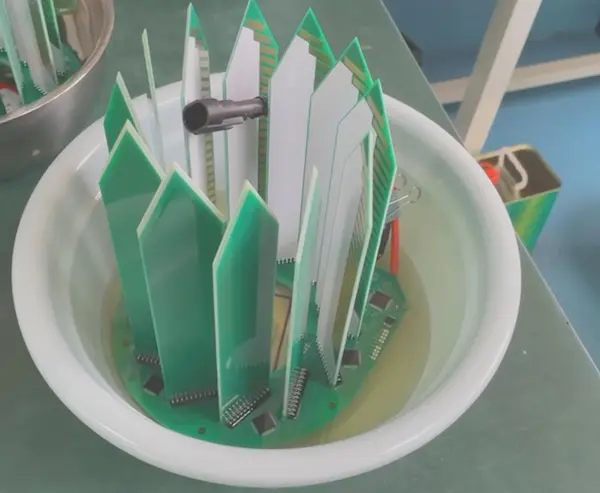
Different coating materials fit different operating environments and rework needs.
How to Choose the Right Coating Material
Before choosing acrylic, silicone, urethane, UV-curable coating, or Parylene, define where the product will be used and what the coating must survive.
Use these decision points before specifying a material:
| Decision factor | What to ask | Why it matters |
|---|---|---|
| Operating environment | Will the product face humidity, condensation, dust, salt air, chemicals, or outdoor exposure? | The environment drives the required protection level. |
| Temperature range | Will the PCBA operate near heat sources or in cold outdoor conditions? | Some materials handle thermal stress better than others. |
| Vibration and movement | Will the board sit near motors, vehicles, pumps, or moving equipment? | Flexible coatings can reduce stress in vibration-prone products. |
| Rework expectation | Is field repair or late-stage repair likely? | Easier rework can reduce cost when design changes or component swaps are expected. |
| Production volume | Is this a prototype, pilot run, or repeat production order? | High-volume production may justify faster curing or automated application. |
| Inspection method | Will the coating need UV traceability or thickness verification? | Inspection requirements should be defined before production. |
| Enclosure plan | Will the board be installed in a sealed housing or potted after coating? | Board-level coating may be only one part of the protection system. |
As a quick starting point:
- Choose acrylic when you need general protection and easier rework.
- Choose silicone when heat, vibration, or flexibility matters.
- Choose urethane when the board faces chemicals, abrasion, or rugged outdoor use.
- Choose UV-curable coating when production speed and fast curing matter.
- Review Parylene when you need very uniform coverage on complex or high-reliability assemblies.
If the choice is moving away from standard liquid-applied materials and toward vapor-deposited protection for dense or high-reliability assemblies, review our Parylene conformal coating guide.
Where Conformal Coating Fits in the PCBA Production Process
The conformal coating process should be planned before the board reaches final production. Layout choices, connector placement, test-point access, and enclosure design can all affect coating quality.
For the full step-by-step flow from testing through inspection, see our conformal coating process guide.
A typical PCBA workflow looks like this:
- Review the design for coating risk, keep-out areas, and test access.
- Assemble the PCBA through SMT, through-hole, or mixed assembly steps.
- Inspect the board using visual inspection, AOI, X-ray, or other checks as needed.
- Load firmware if the product requires firmware before functional testing.
- Run ICT, FCT, or product-specific functional testing.
- Clean or prepare the board surface according to the process requirement.
- Mask connectors, test points, switches, edge contacts, and other no-coat areas.
- Apply the coating by spray, dip, brush, or selective coating.
- Cure the coating by air dry, heat, UV, moisture, or a material-specific process.
- Inspect coating coverage, defects, and thickness where required.
- Release the board to final assembly, enclosure assembly, packaging, or shipment.
Application method depends on board complexity and production scope. Spray coating can be manual or automated and is common for controlled coverage. Dip coating can cover both sides quickly but requires careful masking. Brush coating is useful for repair, touch-up, or small areas.
Document the process before production starts. If your order requires a special keep-out drawing, UV inspection, customer-defined thickness range, or final product assembly after coating, those requirements should be part of the production files.
Testing Before Coating: Why FCT Comes First
Run functional testing before coating whenever your product design allows it. A small component fault, solder issue, wrong value, missing firmware step, or connector problem is much easier to correct before the board is protected by a coating film.
After coating, rework can require several extra steps:
- Identify the failed area.
- Remove or soften the coating without damaging nearby components.
- Repair or replace the component.
- Clean the reworked area.
- Reapply coating.
- Reinspect and retest the assembly.
These steps add labor and risk. They can also damage pads, traces, connectors, or nearby parts if the coating is difficult to remove. Urethane, silicone, UV-curable materials, and Parylene can be especially challenging compared with many acrylic materials.
If your order includes assembly, firmware loading, testing, coating, and enclosure assembly, define the pass/fail sequence before production starts. ACE Electronics can support this through PCBA programming and testing before the boards move to coating.
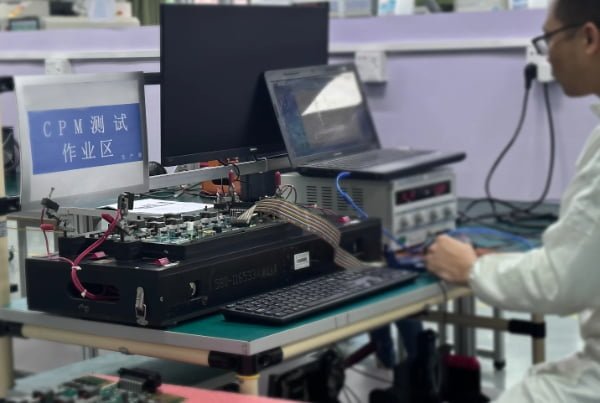
Electrical defects should be found before the board is coated.
Masking and Keep-Out Areas
Conformal coating masking protects areas that should remain uncoated. This is one of the most important details in the order package because a coated connector or test point can create assembly delays or product failures.
For a dedicated checklist of no-coat areas, connectors, test points, RF features, and masking methods, see our conformal coating masking guide.
Common keep-out areas include:
- Connectors and sockets
- Switches, buttons, and adjustment points
- Test pads and programming pads
- Edge fingers and contact surfaces
- Grounding pads
- RF antennas or sensitive RF areas
- Displays, sensors, microphones, and optical windows
- Heat-transfer surfaces
- Mechanical mating areas
A drawing or marked board image is often more useful than a written note.
Masking affects both cost and lead time. A board with many connectors, test points, switches, or edge contacts takes longer to prepare because each no-coat area must be protected before coating starts.
Inspection, Thickness, and Common Defects
Inspection checks three things: whether the coated areas are covered, whether the no-coat areas stayed clean, and whether the coating has visible defects.
Typical issues to check include:
- Missed or thin areas
- Coating on connectors, test points, or other keep-out areas
- Bubbles or trapped air
- Pinholes
- Dewetting or poor adhesion
- Cracking
- Delamination
- Contamination under the coating
- Thickness outside the specified range
If the coating contains a UV tracer, the inspector can use UV light to check coverage more easily. Some projects also require IPC-CC-830 or customer-defined acceptance criteria.
Do not specify a thicker coating just to be safe. Too little coating may not protect the board, but too much coating can create curing problems, connector interference, enclosure fit issues, or harder rework. The target thickness should match the coating material, board design, product environment, and customer requirement.
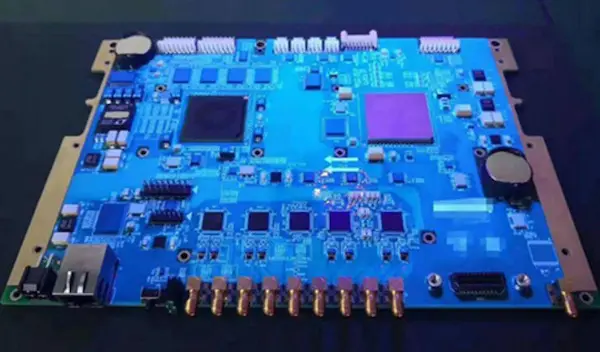
UV-traceable conformal coating helps inspectors check coating coverage and missed areas.
Conformal Coating vs Potting vs Parylene
Conformal coating, potting, and Parylene can all protect electronics, but they solve different problems.
| Protection method | What it does | Best fit | Rework impact |
|---|---|---|---|
| Liquid conformal coating | Adds a thin protective film to the PCBA | Moisture, dust, corrosion, light chemical exposure, general board protection | Varies by material |
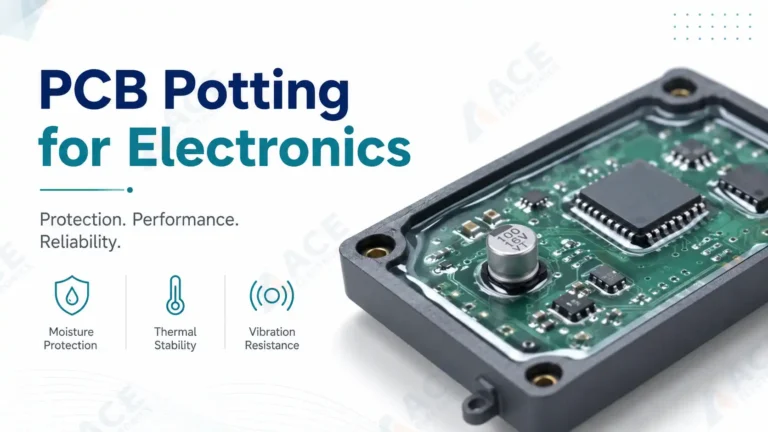
| Potting / encapsulation | Fills a housing or area with resin around the electronics | Strong sealing, shock protection, outdoor or harsh-use products | Usually very difficult |
| Parylene coating | Deposits a highly uniform film through vapor deposition | Fine-pitch assemblies, high-reliability protection, difficult geometries | Difficult and process-specific |
Conformal coating is often the practical choice when the product needs board-level environmental protection and future rework may still matter. Potting is better when the product needs stronger sealing or mechanical protection and repairability is less important. Parylene can be the right option when uniform coverage, barrier performance, or tight spaces make a liquid process less suitable.
ACE Electronics has a dedicated Parylene coating service for projects that need vapor-deposited protection rather than a traditional liquid coating process.
Case Example: Coating as Part of a Production Scope
A payment terminal PCBA shows why coating should be planned together with testing and final assembly. The order was not just a board coating task. It included PCB assembly, firmware flashing, functional testing, acrylic conformal coating, wire harness work, housing support, labels, and repeat production controls.
In that type of product, the coating material matters, but the production sequence matters just as much. If firmware loading or FCT happens too late, a failed unit may need coating removal before repair. If keep-out areas are not defined, connectors and assembly interfaces can create delays. If final product assembly is part of the order, coating thickness and cured-board handling must also fit the enclosure workflow.
You can review the full payment terminal PCBA case study for an example of coating inside a broader production run.
For projects that need Parylene instead of acrylic or urethane, the Parylene-coated hydrogen forklift control board case study is a better reference.
How to Specify Coating Requirements to an Assembly Partner
A clear coating requirement helps your assembly partner quote the order, plan the process, and avoid preventable production questions.
Include these details when preparing an RFQ or production package:
- Product application and expected operating environment
- Humidity, condensation, dust, chemical, salt air, or outdoor exposure
- Preferred coating type, if already selected
- Board images or drawings showing keep-out areas
- Connectors, test points, switches, edge contacts, and sensors that must not be coated
- Required testing before coating
- Firmware loading requirements
- Required inspection method
- Coating thickness target, if specified
- Applicable standard or customer acceptance criteria, if required
- Whether the board will later be potted, installed in an enclosure, or shipped as a final product assembly
- Quantity, pilot run plan, and expected production run volume
- Packaging and export requirements
If your product needs PCB assembly, testing, coating, and enclosure assembly under one production scope, review these requirements before the quote is finalized. ACE provides PCB conformal coating services as part of broader PCBA and final product assembly support when the order requires it.
Frequently Asked Questions
What is conformal coating for PCB assembly?
What is conformal coating for PCB assembly?
Conformal coating for PCB assembly is a thin protective film applied to a completed PCBA to help protect exposed conductors, solder joints, and components from moisture, dust, corrosion, and contamination.
When should a PCBA use conformal coating?
When should a PCBA use conformal coating?
Use coating when your PCBA will face humidity, condensation, dust, chemical mist, salt air, vibration, or other field conditions that can reduce reliability. Base the decision on your product environment and service-life expectations.
What are the main conformal coating types?
What are the main conformal coating types?
The main options include acrylic, silicone, urethane or polyurethane, UV-curable coatings, and Parylene. Acrylic is often easier to rework, silicone handles heat and vibration well, urethane gives stronger chemical and abrasion resistance, UV-curable materials support faster production, and Parylene offers highly uniform vapor-deposited coverage.
Is conformal coating waterproof?
Is conformal coating waterproof?
Conformal coating can improve moisture resistance, but it should not be treated as a full waterproofing method by itself. Products that must survive immersion, pressure washing, or severe outdoor exposure may also need enclosure sealing, potting, or other protection methods.
Should a PCBA be tested before conformal coating?
Should a PCBA be tested before conformal coating?
Yes. Run functional testing before coating whenever possible because rework becomes slower and more expensive after a protective film is applied. Testing first helps you avoid sealing defects under the coating.
Which parts of a PCB should not be conformally coated?
Which parts of a PCB should not be conformally coated?
Common no-coat areas include connectors, sockets, test points, switches, buttons, edge fingers, RF antennas, displays, sensors, grounding pads, and mechanical mating surfaces. The exact keep-out areas should be defined in the order package.
How is conformal coating inspected?
How is conformal coating inspected?
Inspection may include visual checks, UV inspection when the coating contains a tracer, coverage review, no-coat area checks, defect inspection, and thickness verification when required by the specification.
What is the difference between conformal coating and potting?
What is the difference between conformal coating and potting?
Conformal coating is a thin film applied to the PCBA surface. Potting fills a housing or area with resin around the electronics. Potting usually gives stronger sealing and mechanical protection, but it is much harder to rework.
Is Parylene the same as conformal coating?
Is Parylene the same as conformal coating?
Parylene is often discussed as a conformal coating, but its process is different from liquid coatings. It is deposited as a vapor in a specialized process, which can create very uniform coverage on complex board surfaces.
What should I send to a PCBA assembly partner before ordering coating?
What should I send to a PCBA assembly partner before ordering coating?
Send your product environment, preferred coating type if known, no-coat areas, testing requirements, inspection requirements, thickness or standard requirements if any, firmware loading needs, quantity, and whether the order includes enclosure assembly or final product assembly.