Acrylic conformal coating is a popular choice for protecting PCB assemblies that need reliable moisture resistance, fast handling, easy visual inspection, and future rework access. It is widely applied in commercial electronics, control boards, IoT devices, access equipment, and other PCBAs exposed to humidity, dust, light contamination, or condensation.
The suitability of acrylic conformal coating depends on several key factors. These include the operating environment, coating and no-coat areas, testing sequence, rework requirements, material compliance, and final assembly considerations.
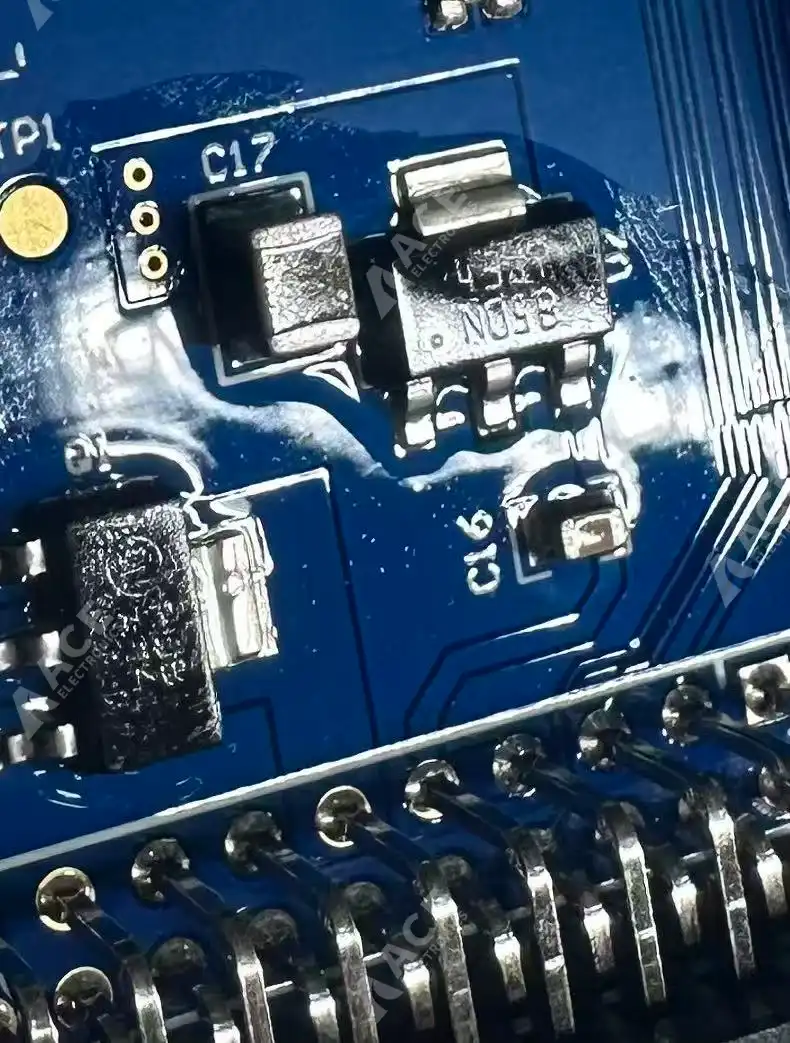
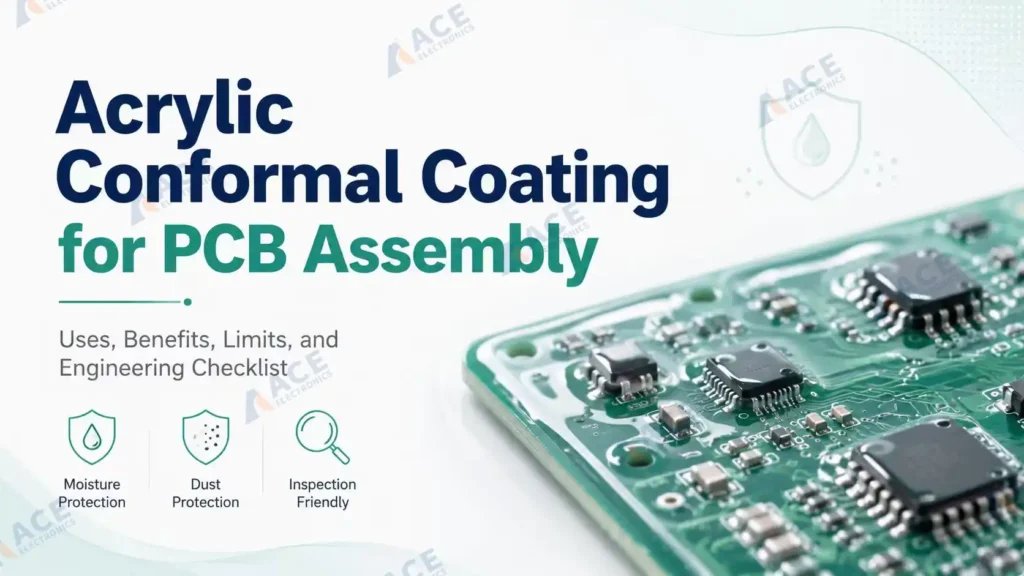
Partial acrylic conformal coating on a PCBA. Coating areas, no-coat areas, inspection needs, and final assembly interfaces should be confirmed before production.
What Is Acrylic Conformal Coating?
Acrylic conformal coating, an AR-type protective layer, forms a thin film over assembled PCBs to shield exposed circuitry from moisture, dust, dirt, fungus, corrosion, and electrical leakage.
Application methods include spray, brush, dip, or selective coating, chosen based on board size, component height, coating coverage, order volume, masking requirements, inspection needs, and the assembly partner’s process. Selecting the right method ensures consistent coverage and reliable protection.
For a complete guide to acrylic and other conformal coating materials and PCB assembly processes, see ACE Electronics' PCB conformal coating material and process guide.
Material Form, Cure, and Typical Brands
Most acrylic conformal coatings for PCB protection are based on acrylic resin or acrylate chemistry. They are usually supplied as a one-part liquid in a solvent carrier. Before curing, the liquid is clear or slightly tinted and has a viscosity suitable for spray, brush, dip, or selective coating. Solvent-based versions often have a noticeable odor during application, so proper ventilation and handling precautions are important.
After curing, acrylic coating forms a thin, clear, dielectric film over the PCBA. The surface is smooth and flexible, suitable for many commercial electronics. Many coatings include a UV tracer or indicator, making coated areas fluoresce under black light or UV-A inspection. This feature helps ensure full coverage and reduces the risk of missed areas.
Acrylic coatings can be either air-dry or UV/LED-curable. Air-dry systems form a film as solvent evaporates and typically reach handling condition within minutes to hours, depending on thickness, airflow, temperature, and the material datasheet. UV-curable coatings cure quickly under the correct light source, with some formulations requiring a secondary moisture or heat cure for shadowed areas.
Acrylic conformal coatings typically maintain performance across a wide temperature range, from around -40 °C to 120 °C. This makes them suitable for most commercial electronics, IoT devices, and control boards under normal (indoor) operating conditions. For sustained high heat, strong vibration, chemical exposure, or harsh outdoor environments, consider alternatives such as silicone, urethane, Parylene, potting, or full enclosure protection.
If the environment is moving beyond normal indoor or light industrial conditions, compare acrylic with our silicone conformal coating guide for heat and vibration, and our urethane conformal coating guide for chemical exposure and abrasion.
Common acrylic conformal coatings from leading brands include:
- MG Chemicals (e.g., 422B, 422C)
- Techspray (e.g., 1640, 1670)
- Electrolube (e.g., AR620, AR645)
- HumiSeal (e.g., 1B73, 1A33)
- Dymax (e.g., 9001-A, 9001-B)
- Miller-Stephenson (e.g., Viscoseal 2000 series)
Brand selection should follow customer requirements, datasheets, approval samples, RoHS/REACH compliance, UL certification if applicable.
Benefits of Acrylic Conformal Coating for PCBs
Acrylic conformal coating offers a practical balance of protection, cost efficiency, and production flexibility. It is ideal for general electronics and PCBs exposed to moderate environmental conditions, while still allowing easy access for rework, repairs, or maintenance. Its value comes from combining moisture protection, electrical insulation, inspection visibility, and manufacturing efficiency.
| Key Consideration | How Acrylic Helps | Impact on PCBA |
|---|---|---|
| Moisture & Humidity | Excellent barrier to moisture and condensation | Reduces corrosion, leakage, and failure risk |
| Electrical Insulation | High dielectric strength | Improves electrical reliability |
| Application & Rework | Spray/brush/dip/selective, easy removal with solvent | Flexible production scheduling, easier rework |
| Fast Dry/Cure | Fast cure at room temperature | Shorter handling cycles, higher throughput |
| Visual Inspection | Transparent or UV-traceable coating | Simplifies coverage check, defect detection |
| Fungus Resistance | Resists fungal growth in humid environments | Improves longevity in challenging conditions |
| Cost & Process | Cost-effective chemistry, easy handling | Fits moderate-risk commercial PCBA production budgets |
| Environmental Profile | Low VOC or compliant variants available | Easier compliance with environmental standards |
Always confirm compliance requirements. For products needing RoHS, REACH, UL, or customer-approved certification, verify the coating brand, part number, datasheet, and compliance files before requesting a quote or sample.
Recommended Applications for Acrylic Conformal Coating
Acrylic conformal coating is particularly suitable for PCBAs operating in moderate indoor environments, where protection against humidity, condensation, handling contamination, or environmental residue is required, while still allowing inspection and potential rework.
It is also ideal during prototype or early production stages. Compared with harder coatings, acrylic can be removed and reapplied more easily, allowing boards to be repaired, cleaned, recoated, inspected, and retested without complicating the process.
For example, in a turnkey payment terminal PCBA project, acrylic coating was integrated into the full production workflow, including PCB fabrication, component sourcing, firmware flashing, functional testing, wire harness assembly, housing, and export packaging. This illustrates why coating requirements should be evaluated as part of the complete production process.
Limits of Acrylic Coating
Acrylic coating has useful strengths, and it also has clear limits. The main concerns are chemical resistance, abrasion resistance, high-temperature exposure, harsh outdoor conditions, and immersion-type risk.
| Risk condition | Why acrylic may be limited |
|---|---|
| Aggressive chemicals or solvents | Acrylic usually has lower chemical resistance |
| High abrasion | The film may lack enough mechanical ruggedness |
| High temperature or strong vibration | Flexibility and thermal behavior may be insufficient |
| Long outdoor exposure | Moisture, UV, salt air, and enclosure leaks may raise risk |
| Water immersion or washdown | Conformal coating alone may provide limited protection |
For harsh industrial, automotive, marine, or chemical-exposure products, acrylic may need comparison against silicone, urethane, Parylene, potting, gasket sealing, or a stronger enclosure strategy. The decision should come from field risk, reliability targets, repair policy, and production constraints.
A low material cost can become expensive if the selected coating creates field returns, extra rework, difficult inspection, or a mismatch with the customer standard.
Common Acrylic Conformal Coating Defects and Process Controls
Acrylic conformal coating is easy to process, but defects can still occur if the board is not clean, the coating is too thick, or the drying conditions are not controlled. These issues should be reviewed before production, especially when the product requires consistent coating coverage and visual inspection.
| Defect | Common Causes | What to Check Before Production |
|---|---|---|
| Bubbles | Coating applied too thick, trapped solvent, fast surface drying, moisture in the board, or air introduced during handling | Confirm coating thickness, board drying, cleaning process, and inspection criteria |
| Blushing / White Haze | High humidity, moisture on the board, or poor solvent release | Review storage conditions, pre-bake needs, cleaning process, and coating environment |
| Runs / Uneven Film | Excess coating, poor board orientation, or difficult access around tall components | Review spray path, board orientation, component layout, and coating method |
| Poor Adhesion | Flux residue, oil, dust, fingerprints, or insufficient cleaning | Confirm board cleanliness and cleaning requirements before coating |
| Wrinkling | Incompatible layers, recoating too soon, or incomplete drying between coats | Confirm drying time, recoating window, and material compatibility |
| Yellowing / Aging | Long-term heat, UV exposure, or harsh field conditions | Review operating temperature, UV exposure, enclosure design, and expected service life |
| Thin or Missed Coverage | Poor spray access, masking errors, selective coating path issues, or shadowed areas under components | Confirm coating map, no-coat areas, UV inspection method, and acceptance criteria |
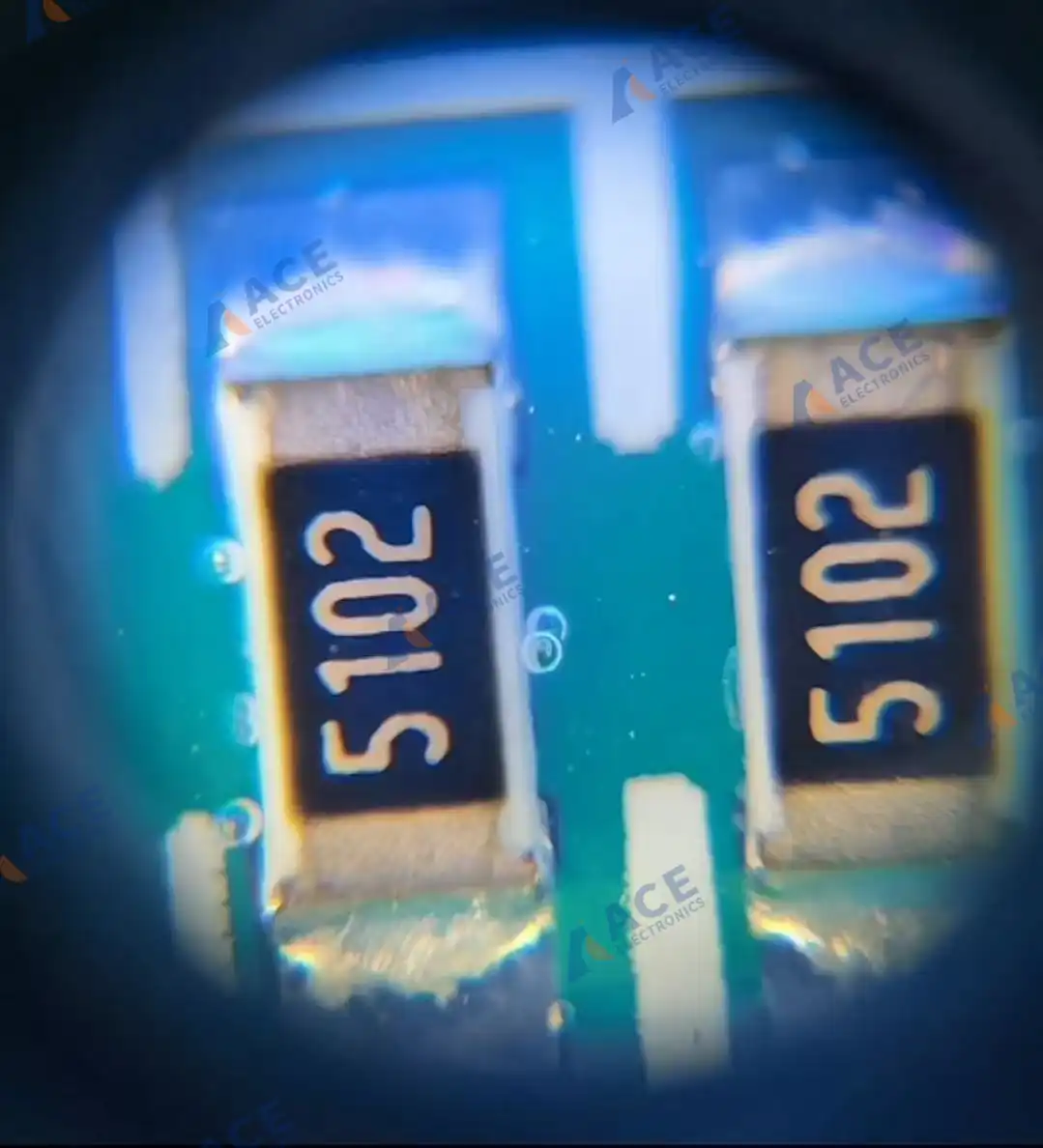
Bubbles in acrylic conformal coating can appear when trapped air, solvent release, coating thickness, board cleanliness, or drying conditions are not controlled well enough.
Acrylic vs Silicone vs Urethane: Quick Selection Guide
Acrylic conformal coating vs silicone and acrylic conformal coating vs urethane searches usually come from the same decision point: which material fits the product risk and production plan?
| Material | Typical strengths | Typical limits | PCBA use case |
|---|---|---|---|
| Acrylic | Cost-effective, fast drying, easier rework | Lower chemical and abrasion resistance | General electronics, indoor controls, moderate-risk products |
| Silicone | Flexible, good for heat and vibration | Can be more difficult to handle or rework | Outdoor, LED, automotive, high-temperature areas |
| Urethane | Strong chemical and abrasion resistance | Harder rework, slower or more demanding process | Industrial, chemical exposure, rugged devices |
Acrylic is often selected when the product needs practical environmental protection and repair access. Silicone is often reviewed for heat, vibration, flexibility, or outdoor exposure. Urethane is often reviewed for chemical resistance and mechanical durability.
The final choice should include the board layout, component sensitivity, masking needs, expected lifetime, testing plan, field environment, and compliance documentation. For production orders, the assembly partner should confirm the coating material and process with the customer before the run starts.
Engineering Checklist Before You Specify Acrylic Coating
Before requesting acrylic conformal coating for pcb assembly, prepare the information that affects quotation, process planning, inspection, and delivery. A clear coating package reduces back-and-forth questions and helps the assembly partner identify risks early.
Use this checklist before RFQ, prototype coating, pilot production, or repeat production:
- What environment must the PCBA survive?
- Which board areas require coating?
- Which no-coat areas must stay exposed?
- Are connectors, test points, programming pads, sensors, LEDs, RF areas, edge fingers, grounding pads, and thermal pads clearly defined?
- What testing happens before coating?
- Is rework expected after coating?
- What inspection method or acceptance criteria is required?
- Will the board go into enclosure assembly or final product assembly after coating?
- What production volume and lead time are expected?
- Are there customer standards, drawings, or approval samples?
- Does the project require brand-name coating material with RoHS, REACH, UL, or other compliance documentation?
Testing should be planned before coating when possible, because defects are easier to repair before the protective film is applied. Rework after coating may still be practical with acrylic coating and can require coating removal, localized repair, cleaning, recoating, inspection, and retesting.
Masking also affects cost and lead time. Connectors, test pads, programming pads, switches, sensors, LEDs, edge contacts, RF features, grounding pads, thermal pads, and mechanical mating areas may need protection. For a focused guide, see conformal coating masking and no-coat areas.
If your PCBA order needs acrylic conformal coating, send ACE Electronics your coating requirement, keep-out drawing, test sequence, approved material requirement, compliance documents, and production volume. Our engineering team can review whether acrylic coating fits the board design, inspection needs, rework expectation, and final assembly plan. For coating service scope, see our conformal coating services for PCBA.
Frequently Asked Questions
What is acrylic conformal coating used for in PCB assembly?
What is acrylic conformal coating used for in PCB assembly?
Acrylic conformal coating is used to protect assembled PCBs from moisture, humidity, dust, dirt, fungus, corrosion, and electrical leakage. It is common in commercial electronics, control boards, IoT devices, access equipment, and other moderate-risk PCBA applications.
When should I choose acrylic conformal coating for a PCBA project?
When should I choose acrylic conformal coating for a PCBA project?
Acrylic coating is a practical choice when the product needs moderate environmental protection, fast handling, inspection visibility, cost control, and possible rework access. It fits many indoor or enclosed electronics with humidity, dust, or light contamination risk.
What information should I send before requesting acrylic conformal coating?
What information should I send before requesting acrylic conformal coating?
Send the coating area, no-coat areas, assembly drawings, expected environment, test sequence, inspection requirements, approved material requirements, RoHS/REACH/UL documentation needs, production volume, and any final assembly or enclosure details.
Can acrylic conformal coating cause bubbles or surface defects?
Can acrylic conformal coating cause bubbles or surface defects?
Yes. Bubbles, white haze, runs, poor adhesion, and uneven film can occur if the board is not clean, the coating is too thick, solvent release is poor, humidity is high, or inspection criteria are unclear. These risks should be reviewed before production.
Can acrylic conformal coating be removed for rework?
Can acrylic conformal coating be removed for rework?
Many acrylic coatings support easier rework than tougher coating systems. Actual acrylic conformal coating rework depends on the coating material, film thickness, board age, component sensitivity, allowed removal method, and whether the board must be recoated and retested.