
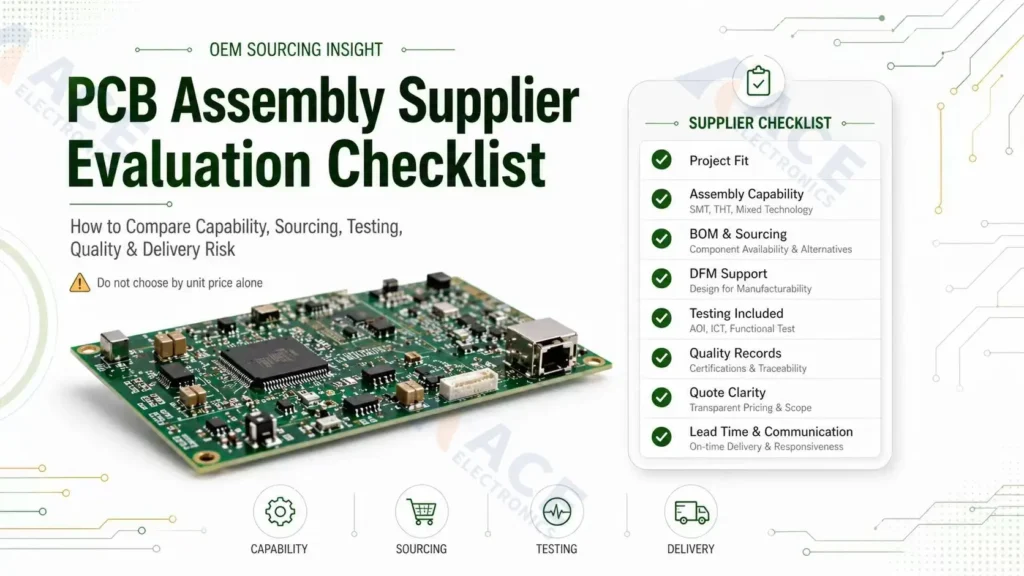
Choose a PCB assembly supplier by checking project fit, assembly capability, BOM review, component sourcing, DFM support, testing, quality records, quote clarity, lead time, and communication. Do not choose by unit price alone. A low quote can become expensive if it excludes testing, sourcing risk, engineering review, tooling, coating, programming, or final assembly.
Use this checklist before RFQ, before a prototype order, or before moving a working design into repeat production.
PCB Assembly Supplier Evaluation Checklist
| Area to check | What to ask | Why it matters |
|---|---|---|
| Project fit | Do they handle your volume, board type, and product stage? | A prototype workshop may not fit repeat production. A high-volume factory may not fit a pilot build. |
| Assembly capability | Do they support SMT, through-hole, mixed assembly, fine-pitch ICs, BGAs, and connectors? | The supplier must match your actual projects, not just a standard capability list. |
| File review | Will they review Gerbers, BOM, pick-and-place files, and drawings before production? | File issues are cheaper to fix before parts are ordered and boards are built. |
| BOM and sourcing | Can they check part availability, approved alternates, lifecycle, and traceability? | Component problems often drive cost and lead time. |
| Design review | Will they flag pad, spacing, polarity, panel, stencil, and test access issues? | Early feedback reduces rework and assembly defects. |
| Testing | What inspection and test steps are included? | AOI alone does not prove the PCBA works. |
| Certifications | Do they hold ISO 9001, ISO 13485, IATF 16949, or other required certifications? | Regulated products may require a certified quality system. |
| Quality records | What records will you receive after the build? | Reports help with incoming inspection, traceability, and failure review. |
| Quote details | Does the quote list PCB, parts, assembly, tooling, testing, and shipping separately? | One total price can hide extra costs or missing work. |
| Lead time | What controls the schedule: PCB, parts, assembly, coating, testing, or shipping? | The longest step sets the real delivery date. |
| Communication | Who answers engineering questions and how are changes confirmed? | Slow answers delay builds and increase revision mistakes. |
For a full view of the manufacturing flow, see this PCB assembly and PCBA manufacturing guide.
1. Match the Supplier to Your Project Type
Start with your project type. A good PCB assembly supplier for a quick prototype may not be the right partner for a repeat orders production.
| Project type | What to check |
|---|---|
| Early prototype | Fast file review, flexible order quantity, clear engineering feedback |
| NPI or pilot run | DFM feedback, BOM risk review, test planning, controlled revision records |
| Low-volume production | Repeatable quality, sourcing stability, inspection records, change control |
| Higher-volume production | Process control, supply planning, yield tracking, packaging, logistics support |
| High-reliability product | Strong traceability, test records, coating or protection options, clear quality standard |
Ask what the supplier produces most often. If your product uses fine-pitch ICs, heavy connectors, conformal coating, functional testing, or box build, do not choose a supplier that mainly handles simple prototype boards.
2. Check Fabrication and Assembly Support
Some suppliers only assemble circuit boards. Some manage PCB fabrication, component sourcing, PCB assembly, testing, and final box build and package together.
Ask these questions:
- Who is responsible for the bare PCB, components, assembly, testing, and packaging?
- Can one team review the Gerber files, BOM, pick-and-place file, and assembly drawing together?
- Does the quote separate PCB cost, component cost, assembly cost, testing, tooling, and shipping?
- If a part is unavailable, who suggests alternates and who approves them?
- If a soldering, testing, or functional issue appears, who leads the failure review?
- Can the supplier handle programming, functional testing, coating, box build, or final packaging if the project needs it?
For buyers who want one supplier to manage the full flow, PCBA contract manufacturing can reduce handoffs between board fabrication, component sourcing, assembly, and testing.
3. Confirm SMT, Through-Hole, and Mixed Assembly Capability
The supplier should match the parts on your board. Do not stop at "we support PCB assembly." Ask about the actual component types and assembly methods your design needs.
| Assembly need | What to confirm |
|---|---|
| SMT assembly | Small passives, IC packages, fine-pitch parts, double-sided SMT |
| Through-hole assembly | Connectors, transformers, relays, terminal blocks, high-stress parts |
| Mixed assembly | SMT plus through-hole on the same PCBA |
| BGA or QFN | X-ray inspection, soldering experience, rework process |
| Large or heavy parts | Mechanical support, solder strength, handling limits |
| Bottom-side parts | Placement, reflow, and inspection plan |
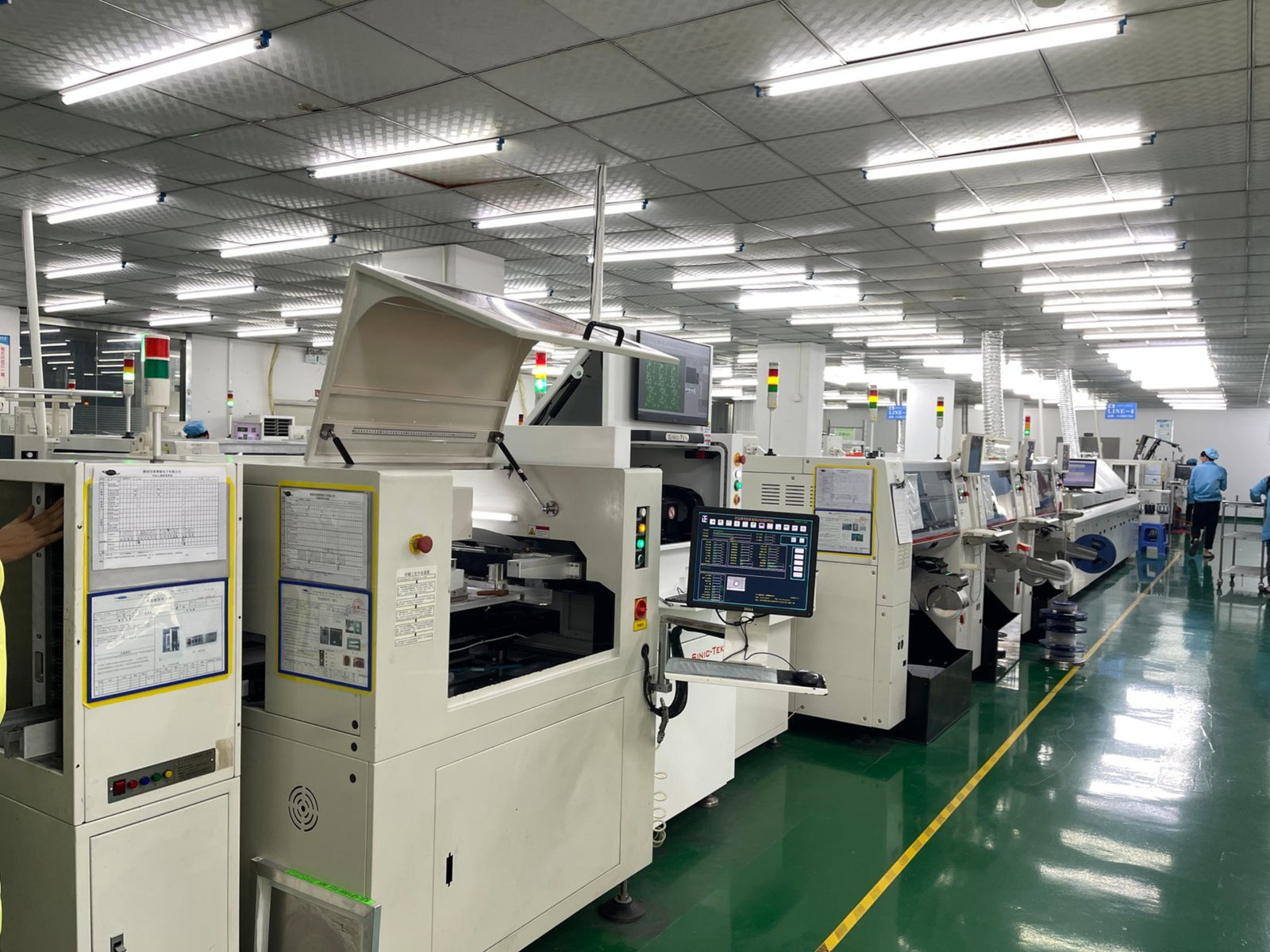 SMT assembly capacity is useful to check when your board uses fine-pitch ICs, small passive parts, or double-sided assembly.
For designs with dense SMT parts, review SMT assembly capability. For connectors, mechanical parts, relays, and high-stress components, check through-hole assembly support.
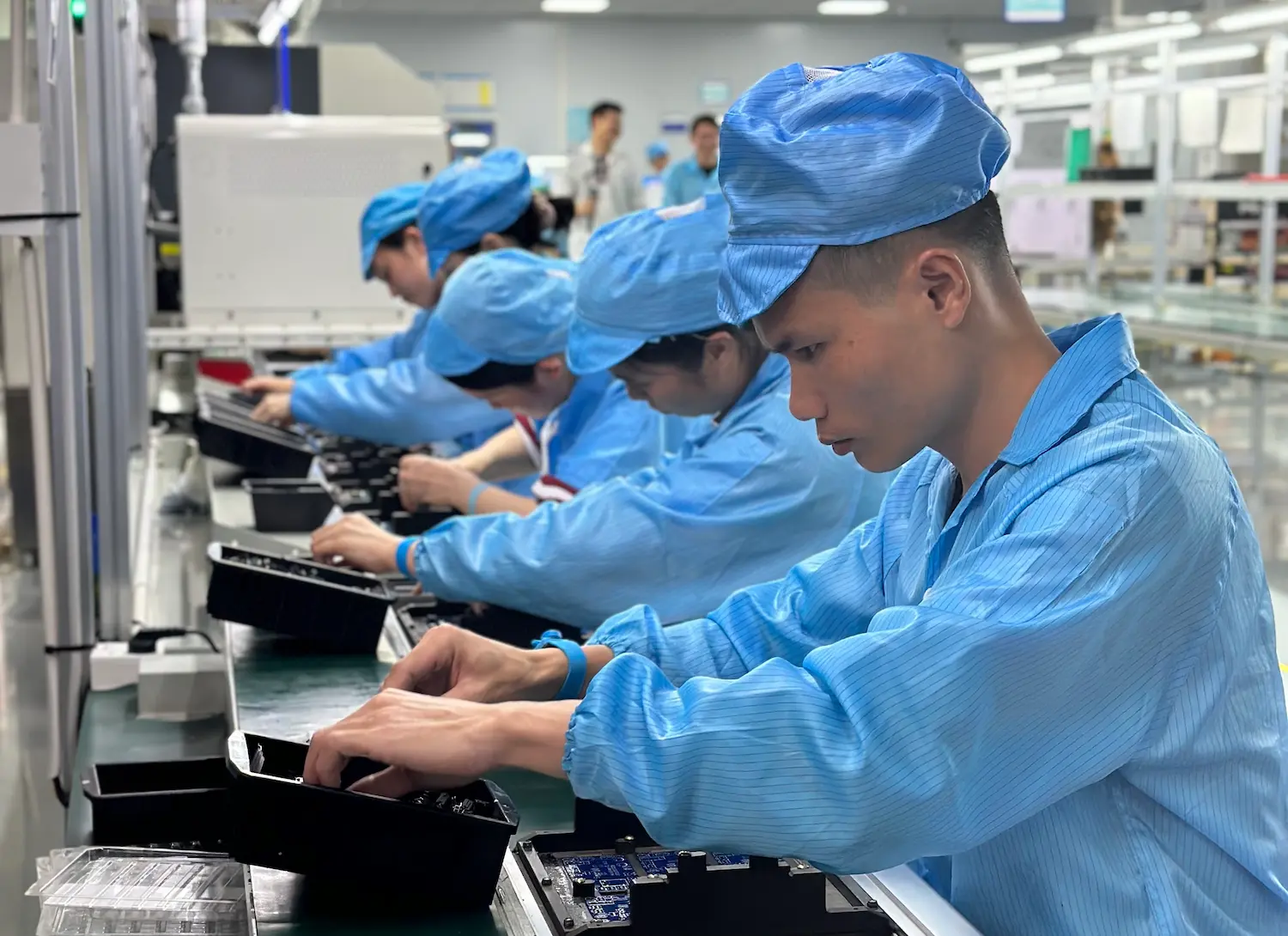 Manual DIP insertion and through-hole assembly support matter when a board uses connectors, relays, transformers, or other large components.
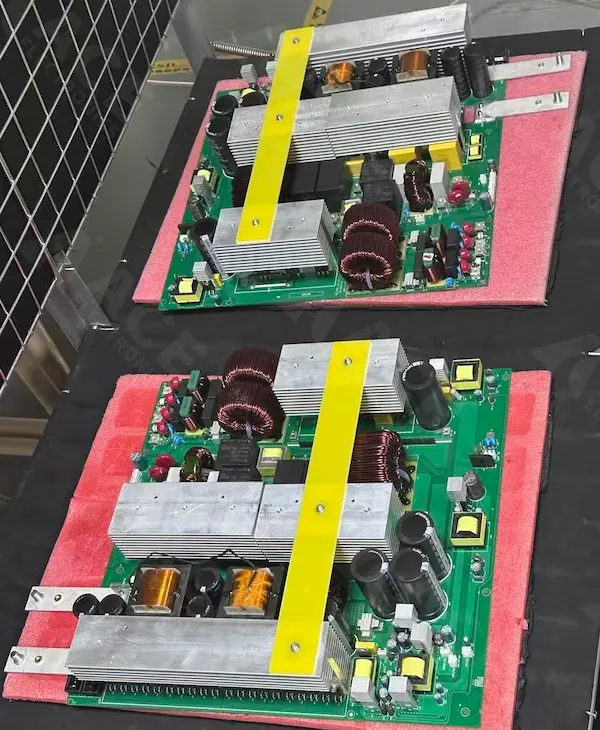 Wave soldering is one process buyers may need to confirm for through-hole or mixed-technology PCB assemblies.
4. Ask How They Review Files Before Production
A supplier should review your build files before ordering parts or starting assembly. The review does not need to be complicated, but it must catch obvious mismatch risks.
Ask whether they check:
- Gerber files and drill files.
- BOM part numbers and quantities.
- Pick-and-place coordinates and rotation.
- Assembly drawing and polarity marks.
- DNI/DNP parts.
- Top and bottom side naming.
- PCB revision, BOM revision, and drawing revision.
- Test and programming requirements.
If you need a file checklist, use this guide: What Files Do You Need for PCB Fabrication and Assembly?
5. Evaluate BOM Review and Component Sourcing
The BOM controls part cost, lead time, substitution risk, and traceability. A supplier that skips BOM review may give a fast quote but create problems after order release.
Ask these questions before RFQ:
- Will you check part availability before quoting?
- Do you source from authorized or traceable channels?
- How do you handle obsolete, NRND, or long-lead parts?
- Will you suggest alternates before order, not after shortages appear?
- Do you need customer approval before using substitute parts?
- Can you separate customer-supplied parts from turnkey parts?
- Can you provide lot or purchase traceability when needed?
For turnkey builds, the supplier should help connect the BOM to real sourcing conditions. For projects with supply risk, link BOM review with component sourcing early.
6. Look for Practical DFM, DFA, and DFT Feedback
Useful engineering feedback is specific. It points to a part, pad, clearance, orientation, test point, or process risk.
Ask for examples of the supplier's feedback. Good comments look like this:
- "U3 pin 1 orientation conflicts with the assembly drawing."
- "C18 and C19 are too close for reliable rework."
- "This connector needs more board support during soldering."
- "Test points are missing for power rail verification."
- "The BGA needs X-ray inspection after reflow."
- "The panel rail may interfere with the connector overhang."
Avoid suppliers that only say "files are OK" without showing what was checked. For layout-stage help, use PCB design and DFM support before release.
7. Check Inspection and Testing Options
Inspection checks workmanship. Testing checks whether the board works. Many projects need both.
| Method | What it checks | When it helps |
|---|---|---|
| SPI | Solder paste print quality | Fine-pitch SMT, dense boards, yield control |
| AOI | Missing parts, polarity, solder defects, visible placement issues | Most SMT assemblies |
| X-ray | Hidden solder joints under BGA, QFN, LGA, and some connectors | Boards with hidden joints |
| ICT or flying probe | Shorts, opens, component values, net-level electrical checks | Boards with test access |
| Functional test | Real product function under powered conditions | Product release, pilot runs, repeat production |
| Programming | Firmware, memory, MCU, FPGA, or module setup | Boards that must ship ready to run |
Ask what is included in the quote. If functional testing, firmware loading, or serialization is required, send the test procedure and programming files before quoting. See IC programming and testing for typical production support.
8. Check Certifications and Quality System Fit
Certifications do not prove that every production will be perfect, but they show whether the supplier has a formal quality system. For medical, automotive, industrial, and high-reliability products, they can be a basic screening requirement.
Ask which certifications apply to the actual factory that will build your PCBAs:
| Certification | What it usually signals | When it matters |
|---|---|---|
| ISO 9001 | General quality management system | Most repeat production projects |
| ISO 13485 | Medical device quality management | Medical electronics and healthcare devices |
| IATF 16949 | Automotive quality management | Automotive electronics and vehicle-related products |
| IPC-A-610 | Assembly workmanship acceptance standard | PCBA inspection and workmanship requirements |
| IPC J-STD-001 | Soldered electrical and electronic assembly requirements | Projects with defined soldering quality requirements |
| UL-related support | Material or product safety file support | Products that need UL-controlled materials or markings |
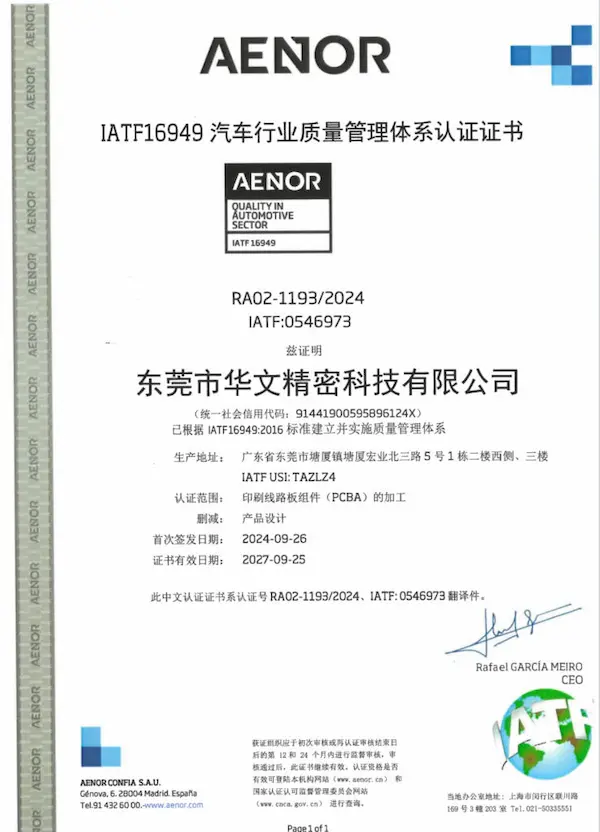 For automotive or vehicle-related electronics, ask whether the factory holds the required quality system certification and whether it applies to the production site.
Ask for a copy of the certificate. Check the factory name, covered process, and expiration date.
9. Compare Quotes Beyond Unit Price
Do not compare PCB assembly quotes by unit price alone. Make sure each quote includes the same scope.
| Quote item | What to check |
|---|---|
| PCB fabrication | Board quantity, layer count, material, surface finish, panelization |
| Components Cost | Whether there are alternates marks |
| Assembly Cost | Whether includes SMT, through-hole, mixed assembly |
| Tooling | Stencil, fixture, test fixture |
| Inspection | AOI, X-ray, first article, extra inspection needs |
| Testing | ICT, flying probe, FCT, burn-in, programming |
| Post-assembly work | Coating, cleaning, labeling, box build, packaging |
| Logistics | Shipping method, packaging |
| Quote validity | How long parts price and lead time are valid |
A quote that excludes testing, tooling, parts risk, or packaging may look cheaper at first. Ask for a clean breakdown before deciding.
10. Check Post-Assembly Services
If you need more than assembled PCBAs, ask about post-assembly work before RFQ. These services can change cost, lead time, and responsibility.
| Service | What to ask |
|---|---|
| Firmware programming | What file format, version, checksum, and verification step are needed? |
| Functional testing | Can the supplier run your test procedure or build a fixture? |
| Conformal coating | What coating type, masking areas, cure process, and inspection method are used? |
| Parylene coating | Is it handled in-house or by a qualified partner? What thickness or spec is required? |
| Cable and harness assembly | Can cables, connectors, and labels be sourced and assembled? |
| Box build | Can PCBAs be installed into enclosures with screws, displays, labels, and accessories? |
| Packaging | What packaging, barcode, serial number, and shipment protection are available? |
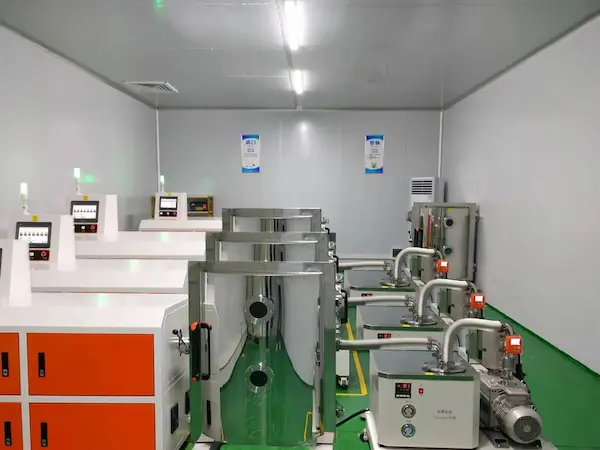 If your product needs Parylene coating, confirm whether the supplier controls the coating process in-house or through a qualified partner.
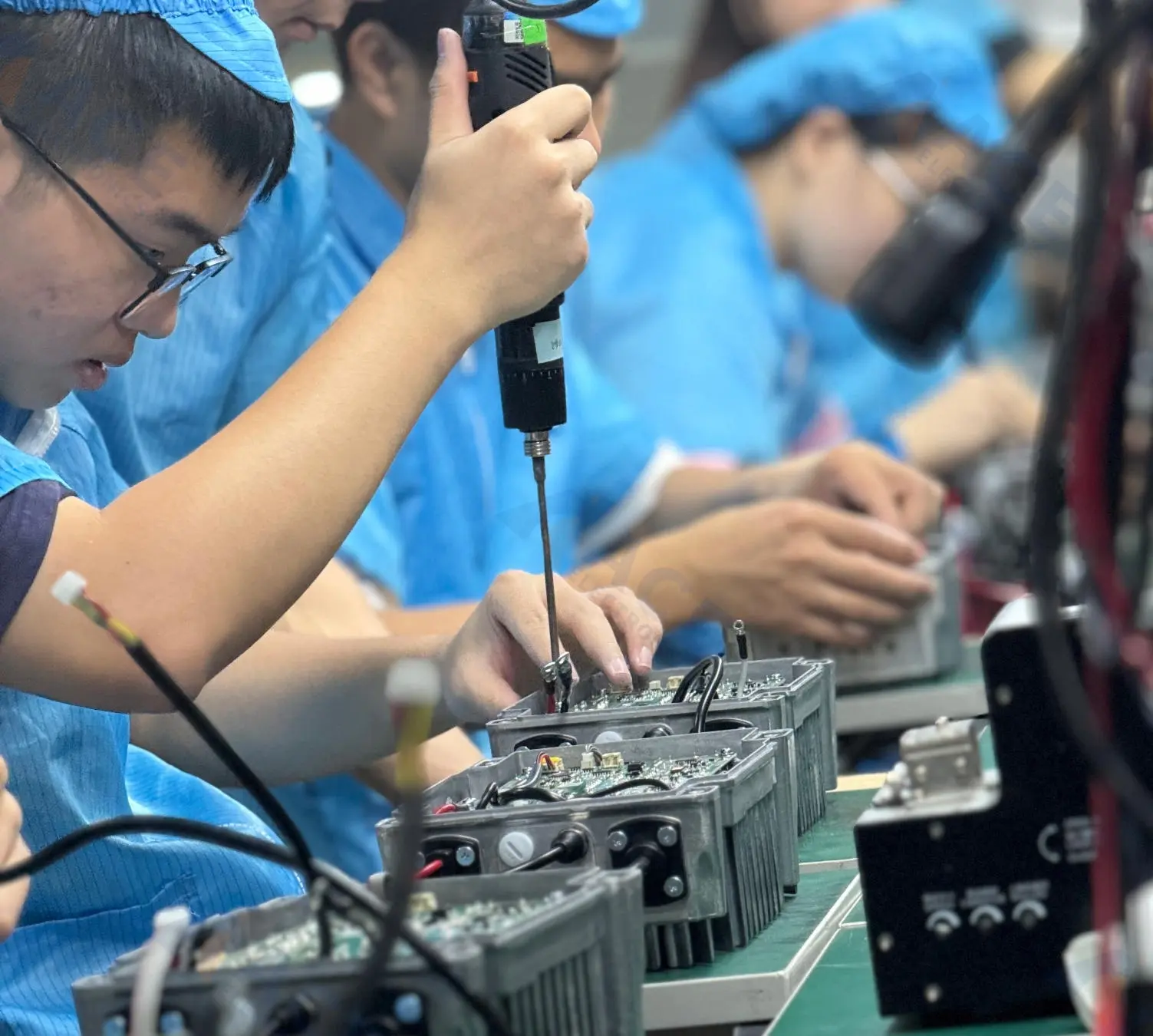 Box build support matters when the project needs PCBAs installed into an enclosure with wiring, labels, accessories, and final packaging.
Do not assume every PCB assembly supplier can handle these steps. Put them in the RFQ and ask whether they are done in-house, outsourced, or excluded. For protective coating needs, review PCBA conformal coating and Parylene services.
11. Check Communication and Project Support
The person who handles your RFQ often becomes your daily contact after the order. Use the first emails and calls to judge whether the supplier can communicate clearly and solve problems quickly.
Check these points:
- Do they understand your questions, or do they only send a standard price reply?
- Can they explain file issues, BOM questions, lead time, testing, and quality records in clear English or your working language?
- Do they reply with specific answers instead of vague promises?
- Can they join a video call before the first order?
- Can they show the factory, assembly line, warehouse, testing area, or quality process by video when needed?
- Do they confirm changes in writing after a call?
Good communication does not replace technical capability, but poor communication can damage a good build. If a supplier is hard to reach before payment, it may be harder to solve problems after production starts.
12. Decide Between Turnkey, Consigned, and Partial Turnkey
The supplier should support the purchasing model you need.
| Model | Customer provides | Supplier provides | Best fit |
|---|---|---|---|
| Turnkey | Design files, approved BOM, test requirements | PCB, parts, assembly, inspection, testing | Buyers who want one supplier to manage the build |
| Consigned | Parts or full kits, design files, assembly instructions | Assembly and agreed inspection/testing | Buyers who already own inventory or controlled parts |
| Partial turnkey | Some key parts, design files, sourcing rules | Remaining parts, assembly, testing | Projects with critical customer-controlled parts |
Ask how shortages, extra parts, damaged parts, and unused consigned parts are reported. If the supplier cannot explain this clearly, expect confusion during the build.
13. Watch for Red Flags
Be careful if a PCB assembly supplier:
- Gives only a single total price with no breakdown.
- Starts sourcing without BOM review.
- Pushes substitute parts without written approval.
- Cannot explain what testing is included.
- Says X-ray is available but does not define when it is used.
- Does not ask for pick-and-place files or assembly drawings.
- Avoids questions about traceability.
- Has no clear process for ECO changes.
- Gives unrealistic lead times before checking parts.
- Cannot provide inspection or test records.
- Responds slowly before the order is placed.
The sales process often shows how production communication will feel. If basic questions are hard before payment, production changes may be harder later.
Questions to Ask Before Sending an RFQ
Use these questions to compare suppliers:
- What files do you need for quote and production?
- Can you review my BOM before quoting parts?
- Do you support SMT, through-hole, and mixed assembly?
- Can you handle fine-pitch ICs, BGAs, or special connectors on this board?
- What inspection steps are included by default?
- Which certifications apply to the factory that will build my PCBAs?
- Can you run functional testing or programming?
- What quality records will I receive?
- How do you approve alternate components?
- Can you support turnkey, consigned, or partial turnkey builds?
- Are coating, box build, labeling, and packaging available if needed?
- What is included and excluded in the quote?
- How do you manage file revisions and ECO changes?
Frequently Asked Questions
How do I choose a PCB assembly supplier?
How do I choose a PCB assembly supplier?
Choose a PCB assembly supplier by matching their capability to your board, volume, testing needs, sourcing model, quality requirements, and delivery schedule. Ask for a clear quote, file review, BOM review, inspection plan, and quality records before placing an order.
What should I ask a PCB assembly supplier before RFQ?
What should I ask a PCB assembly supplier before RFQ?
Ask what files they need, whether they review the BOM, what inspection and testing are included, how they handle alternate parts, what records they provide, who will manage the project, and whether services such as programming, coating, box build, and packaging are included or excluded.
What is the difference between a PCB assembly supplier and a PCB assembly manufacturer?
What is the difference between a PCB assembly supplier and a PCB assembly manufacturer?
In common use, the terms often overlap. A PCB assembly manufacturer usually refers to the factory that builds PCBAs. A PCB assembly supplier may also manage sourcing, fabrication, testing, coating, packaging, or logistics. Ask what work is done in-house and what is outsourced.
Should I choose turnkey or consigned PCB assembly?
Should I choose turnkey or consigned PCB assembly?
Choose turnkey if you want one supplier to manage PCB fabrication, parts, assembly, and testing. Choose consigned if your team already owns the parts or must control sourcing. Choose partial turnkey if you want to supply only critical parts and let the supplier source the rest.
How do I compare PCB assembly quotes?
How do I compare PCB assembly quotes?
Compare the same scope. Check PCB cost, component cost, assembly cost, stencil or fixture cost, testing, programming, coating, packaging, shipping, MOQ, quote validity, and lead time. A lower unit price is not always the lower total cost.
What quality records should a PCBA supplier provide?
What quality records should a PCBA supplier provide?
Common records include first article inspection, AOI or X-ray results, functional test results, programming confirmation, lot records, material traceability, rework notes, and certificate of conformance when required.
What certifications should a PCB assembly supplier have?
What certifications should a PCB assembly supplier have?
For general production, ISO 9001 is a common baseline. Medical projects may require ISO 13485, and automotive projects may require IATF 16949. Also ask whether the supplier works to IPC-A-610 or IPC J-STD-001 workmanship standards when those standards matter for your product.
Why does communication matter when choosing a PCB assembly supplier?
Why does communication matter when choosing a PCB assembly supplier?
The daily contact often controls how quickly file issues, BOM questions, delivery changes, and quality problems are handled. Before the first order, check whether the supplier can answer clearly in your working language, join a video call, confirm changes in writing, and explain who manages engineering, sourcing, and delivery updates.
Is the cheapest PCB assembly supplier a good choice?
Is the cheapest PCB assembly supplier a good choice?
Not always. A cheap supplier may be a good fit for a simple prototype, but low price can also mean missing testing, weak sourcing control, unclear communication, or limited quality records. Compare total risk, not only unit price.
Conclusion
A good PCB assembly supplier fits your project, checks your files, reviews your BOM, controls sourcing, supports the right assembly process, tests what matters, and gives clear records. The right choice should make the build easier to manage, not just cheaper to quote.
If your project needs PCB fabrication, component sourcing, SMT and through-hole assembly, testing, programming, coating, or box build support, ACE Electronics can review the build scope through its PCBA contract manufacturing workflow before production starts.
About the Author
Bill Ho is Sales Engineer and Chief Editor at ACE Electronics, with 10 years of experience in PCB fabrication and PCB assembly.
He writes practical technical content focused on manufacturability review, fabrication communication, and assembly risk reduction.