On this page
After completing the first 2000-unit agricultural root monitoring PCBA order, the same USA client returned with a second-generation PCB design and a larger 4000-unit PCB assembly order.
The product was still based on the same root monitoring probe concept: one main control board connected to twelve arrow-shaped sensing boards for soil-based impedance measurement. For this Gen 2 order, the client had updated the PCB layout, separated the 915 MHz wireless transceiver into its own board, and asked us to handle a larger electronics manufacturing scope, including PCB fabrication, PCB assembly, component sourcing, firmware programming, conformal coating, cable harnesses, functional testing, and export packaging.
Project Snapshot
| Item | Details |
|---|---|
| Industry | Agricultural electronics / root monitoring equipment |
| Production volume | 4000 units, second-generation production run |
| PCB assembly scope | Main control board, RF module board, and 48,000 arrow sensing boards |
| Key components | Microchip PIC MCU, RFM69HCW-915 wireless transceiver, customized waterproof wire harness |
| Manufacturing scope | PCB assembly, PCB fabrication, component sourcing, firmware programming, conformal coating, wire harness, functional testing, export packaging |
| Key process improvement | Improved test fixture to test RF module board & main board together |
| Result | Around 60% faster test throughput and 5% lower per-unit cost compared with Gen 1 |
Manufacturing Results at a Glance
- 4000 complete units manufactured across multiple batches
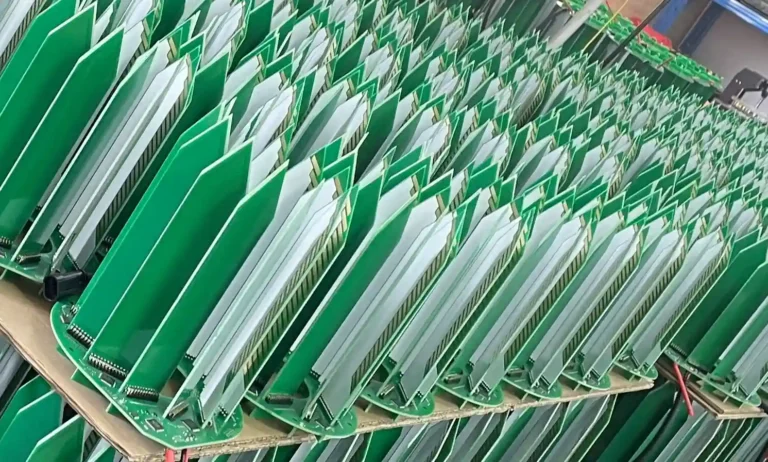
- 48,000 arrow sensing boards processed as panelized arrays, with through-hole components wave-soldered
- PIC firmware programming by programming machines before SMT assembly
- Customized functional test fixture reduced test cycle time by around 60%
- Export packaging upgraded to 5-ply BC-flute corrugated cartons with die-cut corrugated dividers, protecting the assembled PCB during ocean freight.
Second-Generation PCB Design: What the Client Changed
For the second production run, the client sent us an updated PCB design package, including new Gerber files and BOM. The product structure was based on one main control board soldered with twelve arrow-shaped sensing boards, but added a seperated RF assembled PCB.
The two key changes:
- RFM69HCW-915 wireless transceiver split to a separate board. In Gen 1, the 915 MHz radio module (designed for the US ISM band) was integrated on the main control board. For Gen 2, the client pulled the RF section onto its own dedicated PCB. This simplified the main board layout, reduced potential interference between the RF front-end and the impedance-sensing analog path.
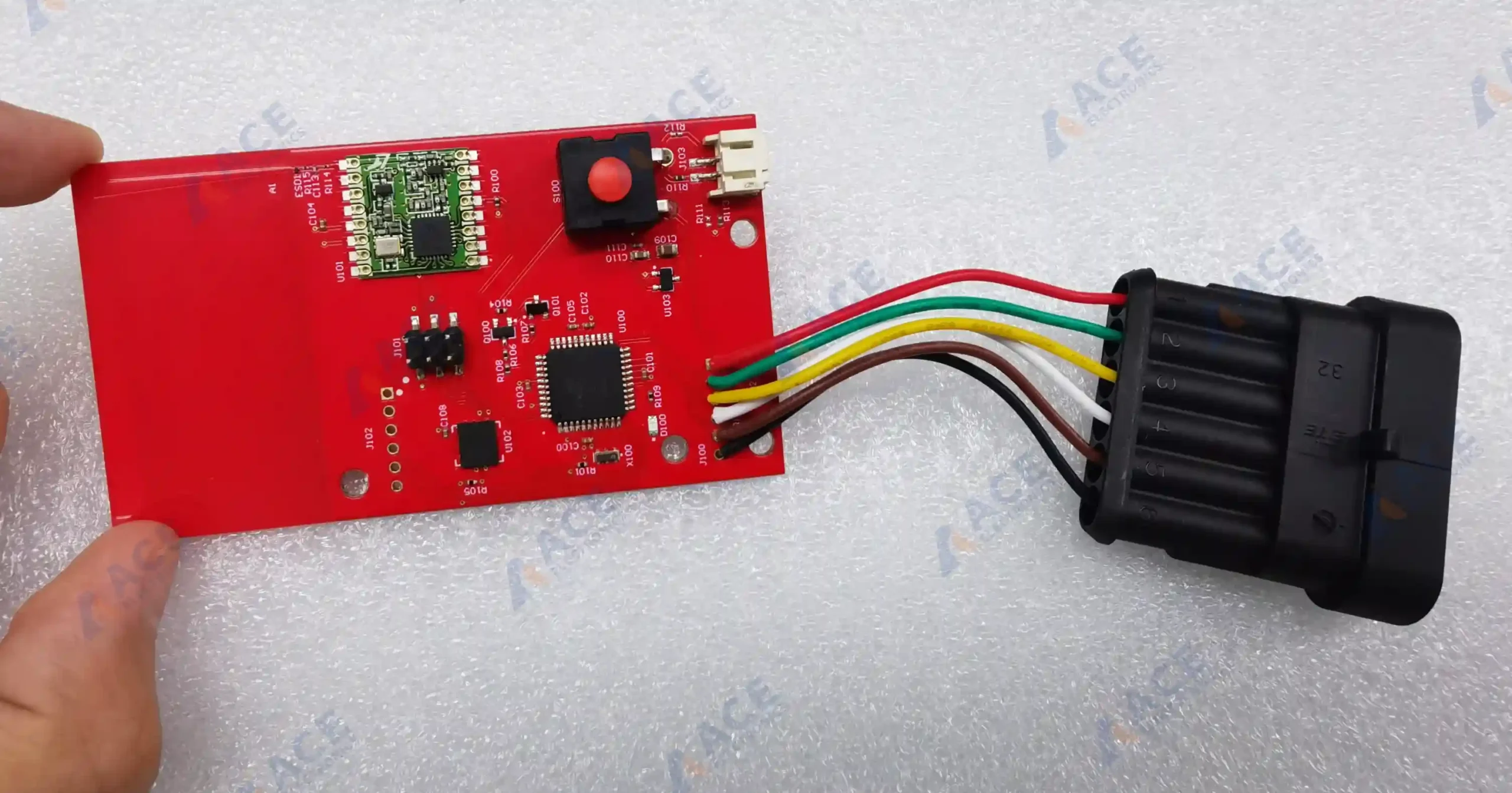
Separate RF board with RFM69HCW-915 wireless transceiver module and waterproof cable harness, assembled as part of the Gen 2 design update.
- The PCB is changed to red solder mask** replaced the original green. The color change was purely a visual identifier for field technicians managing mixed Gen 1 and Gen 2 inventory across research sites.
What stayed the same: Microchip PIC microcontroller as the core processor, TE waterproof connectors for the cable harnesses — all validated through Gen 1's zero-failure field record and left unchanged.
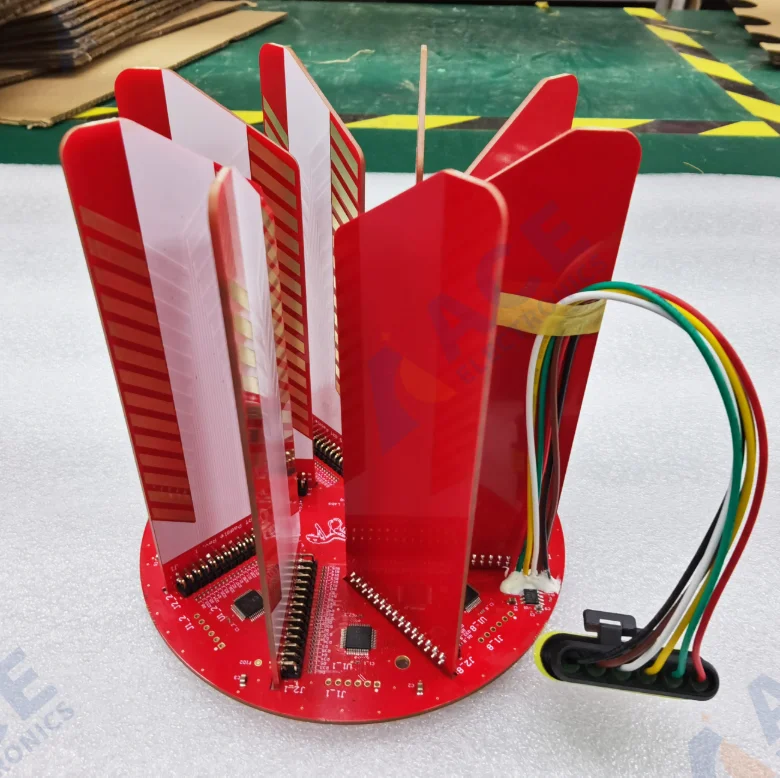
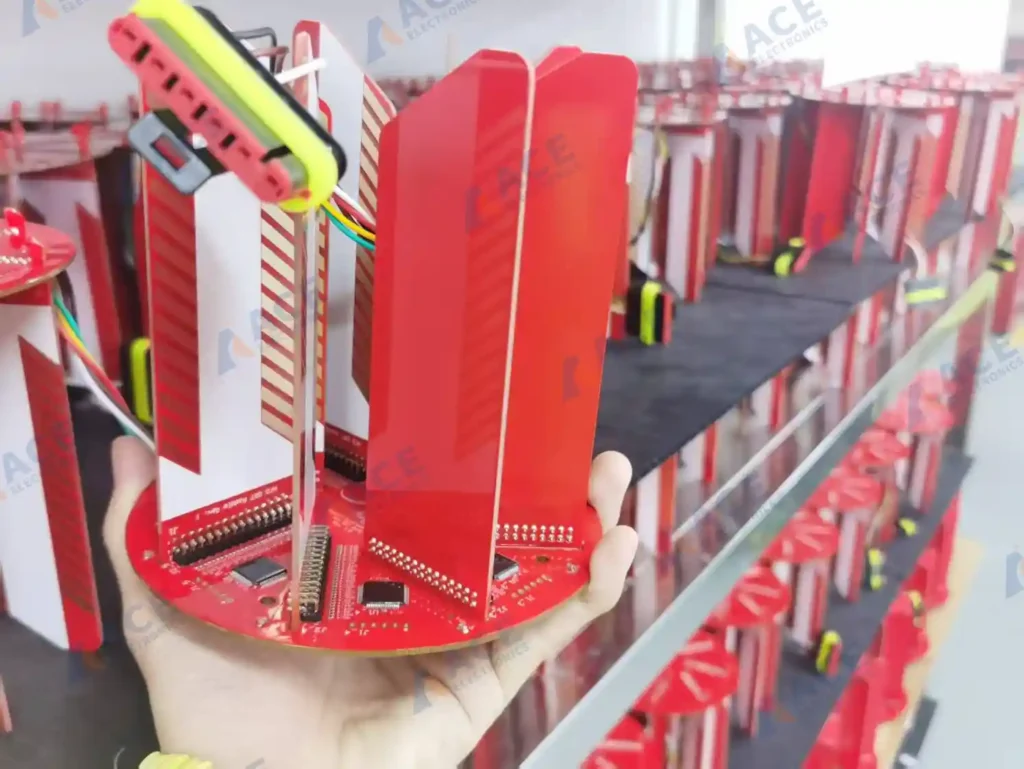
Assembled main control PCB connected to twelve arrow-shaped sensing boards, forming the core structure of the agricultural root monitoring probe.
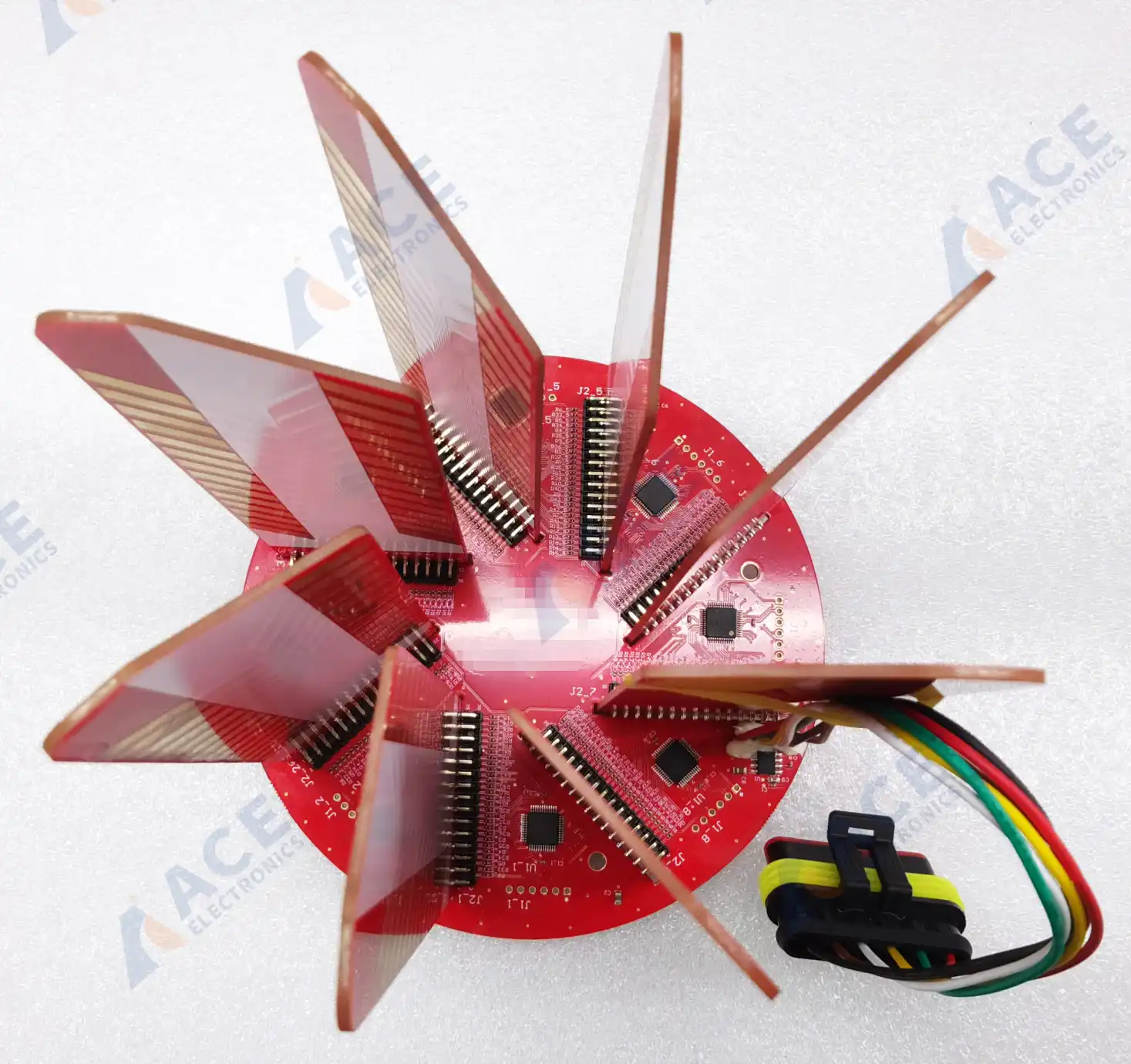
Top view of the assembled probe structure, showing the circular main PCB and twelve vertical sensing boards used for soil-based root monitoring.
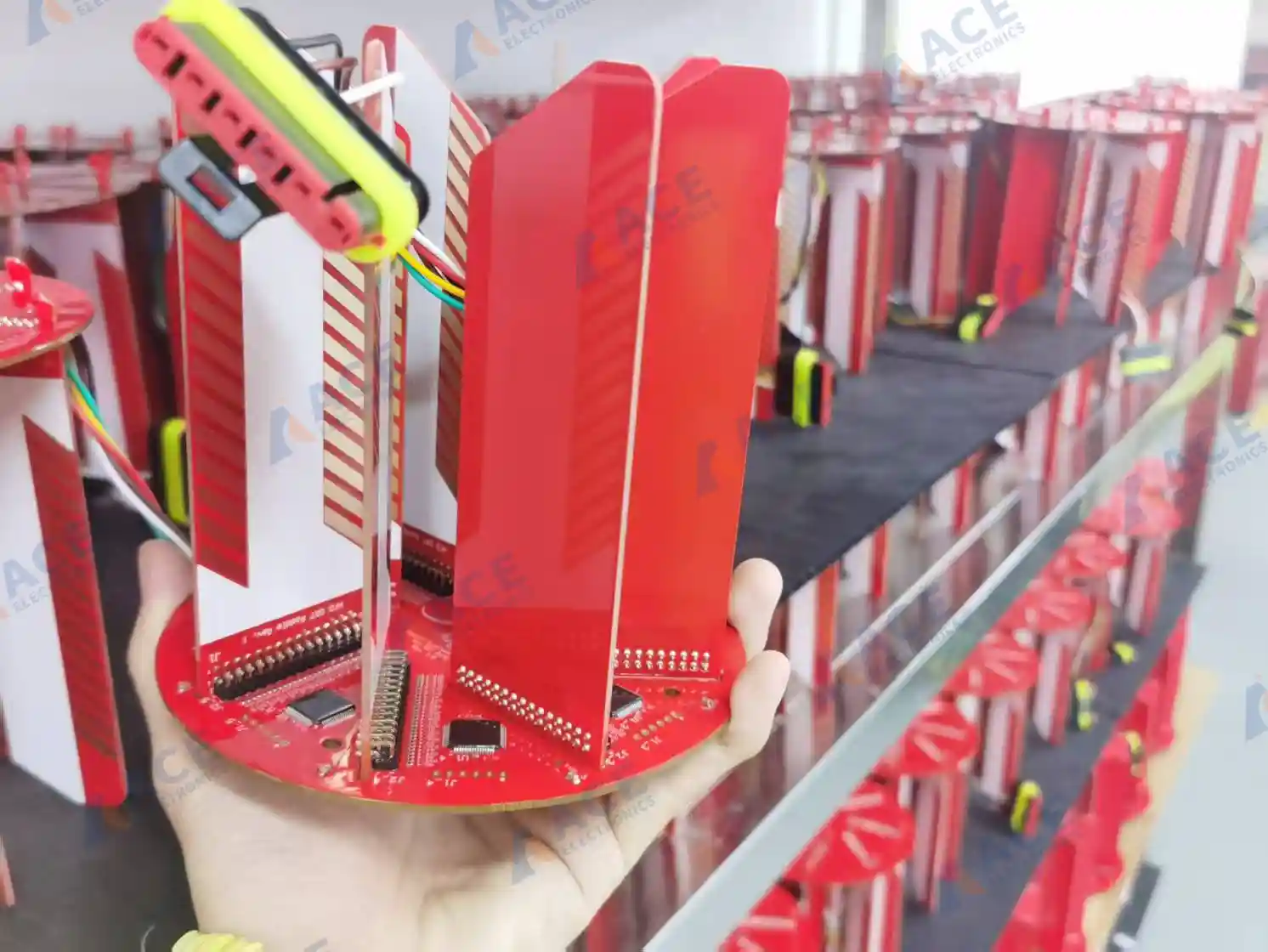
Gen 2 agricultural root monitoring PCBA assembly, including the red main control board, vertical arrow-shaped sensing boards, and cable harness connection.
Microchip PIC MCU Sourcing and In-House Firmware Programming
Component Sourcing at 4000-Unit Volume
For this Gen 2 order, component sourcing became a bigger part of the project. The 4000-unit production run required 48,000 Microchip PIC MCUs.
Through our existing component sourcing channels, we secured 10% better PIC MCU pricing than the client's own purchase quotes. The higher volume also helped us reach a better Microchip direct-factory price tier compared with the first 2000-unit run.
For customers moving from prototype or pilot builds into volume PCBA production, components sourcing is not only about getting a lower price. It is also about confirming stock, locking allocation, checking lead times, and making sure key components will not delay assembly.
This is one of the structural advantages of working with a contract manufacturer whose procurement team already buys from these suppliers for other active projects. Your order does not stand alone in the supply chain — it benefits from aggregate purchasing volume across multiple clients and industries.
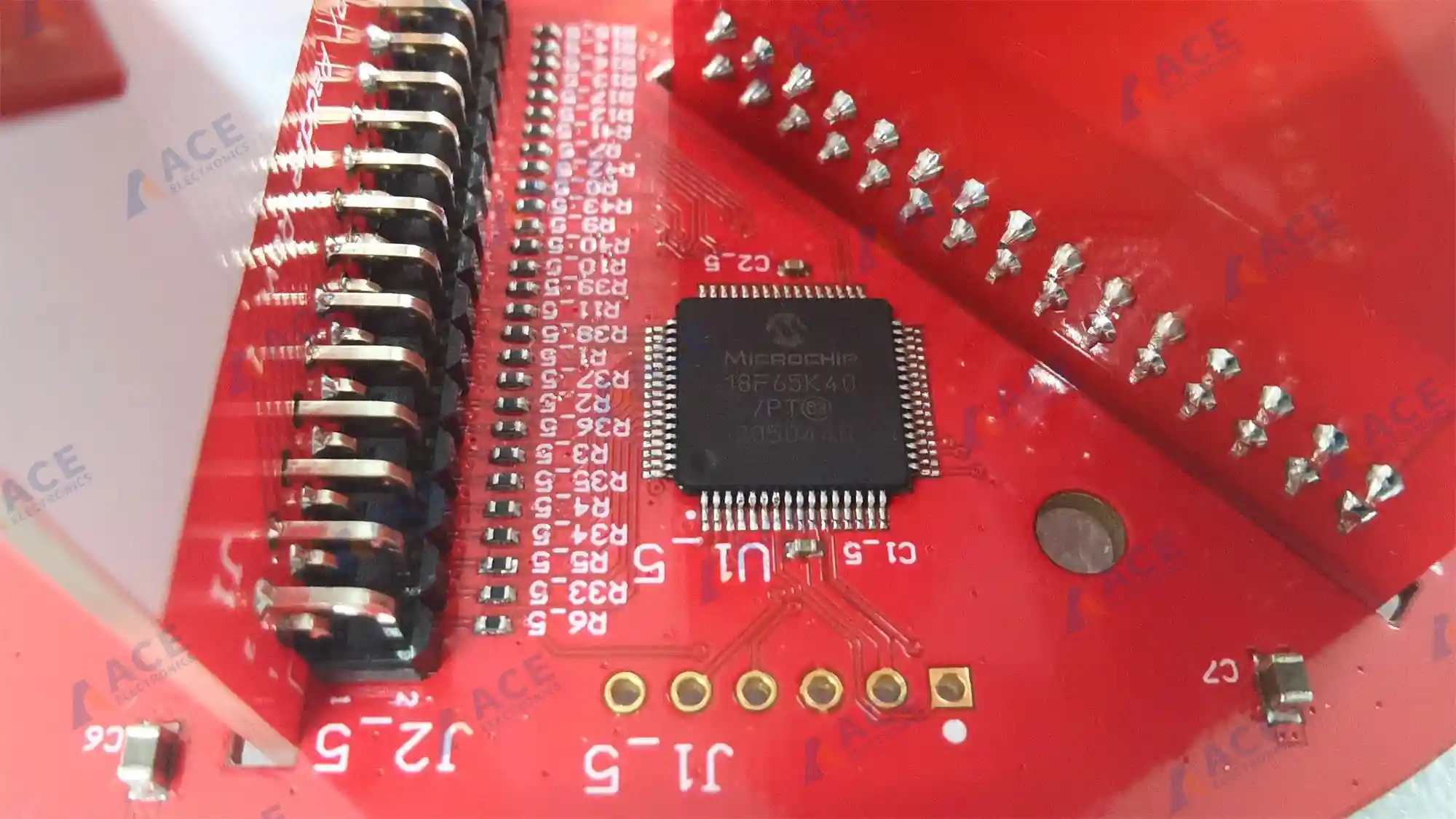
Close-up of the Microchip PIC microcontroller assembled on the Gen 2 red PCBA, with surrounding pin headers and through-hole solder joints.
Firmware Programming Before SMT Assembly
For this project, firmware programming was completed before SMT assembly. The Microchip PIC MCUs were programmed in batches using a dedicated chip programming machine, then placed onto the PCB during the normal SMT process.
Before mass programming, we confirmed the programming requirements with the client. This included checking whether any fuse settings were required, confirming the exact fuse configuration values, and asking the client to verify the checksum of the firmware file.
To reduce risk before full production, we first programmed 10 PIC chips and assembled them onto sample boards. These samples were sent to the client for validation testing. After the client confirmed that the firmware and board function were correct, we proceeded with batch programming for the full production run.
This process helped prevent firmware-related production issues. By confirming the fuse settings, verifying the program file checksum, and completing sample-board validation before mass programming, we reduced the risk of programming errors affecting the 4000-unit production run.
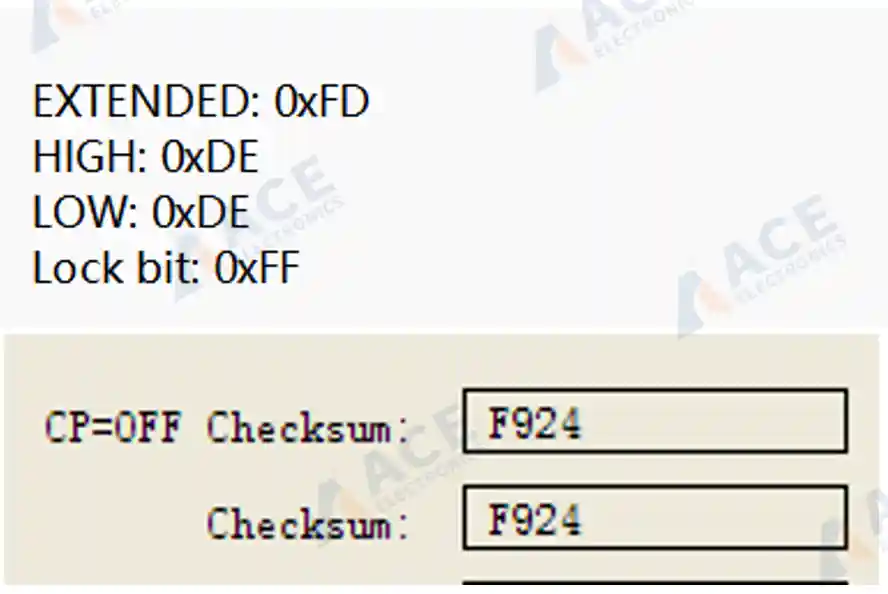
PIC firmware programming setup showing fuse configuration and checksum confirmation before sample validation and batch chip programming.
Custom Test Fixtures for Faster Functional Testing
For this Gen 2 production run, the client updated both the PCB design and the functional test requirements. The test setup used for the first production run could not be copied directly, so our engineering team redesigned the test fixtures based on the new board layout and test procedure.
Instead of testing each unit with a single fixture setup, we built five custom functional test fixtures for this project. This allowed multiple PCBAs to be tested in parallel and helped reduce the waiting time between assembly, testing, and final inspection.
Each test fixture was designed to check the assembled main control board, the twelve arrow-shaped sensing boards, and the related signal connections according to the client's updated requirements. The goal was not only to speed up testing, but also to keep the test process consistent across all production batches.
By preparing five test fixtures before mass production, we improved test throughput and reduced the risk of testing becoming a production bottleneck during the 4000-unit run.
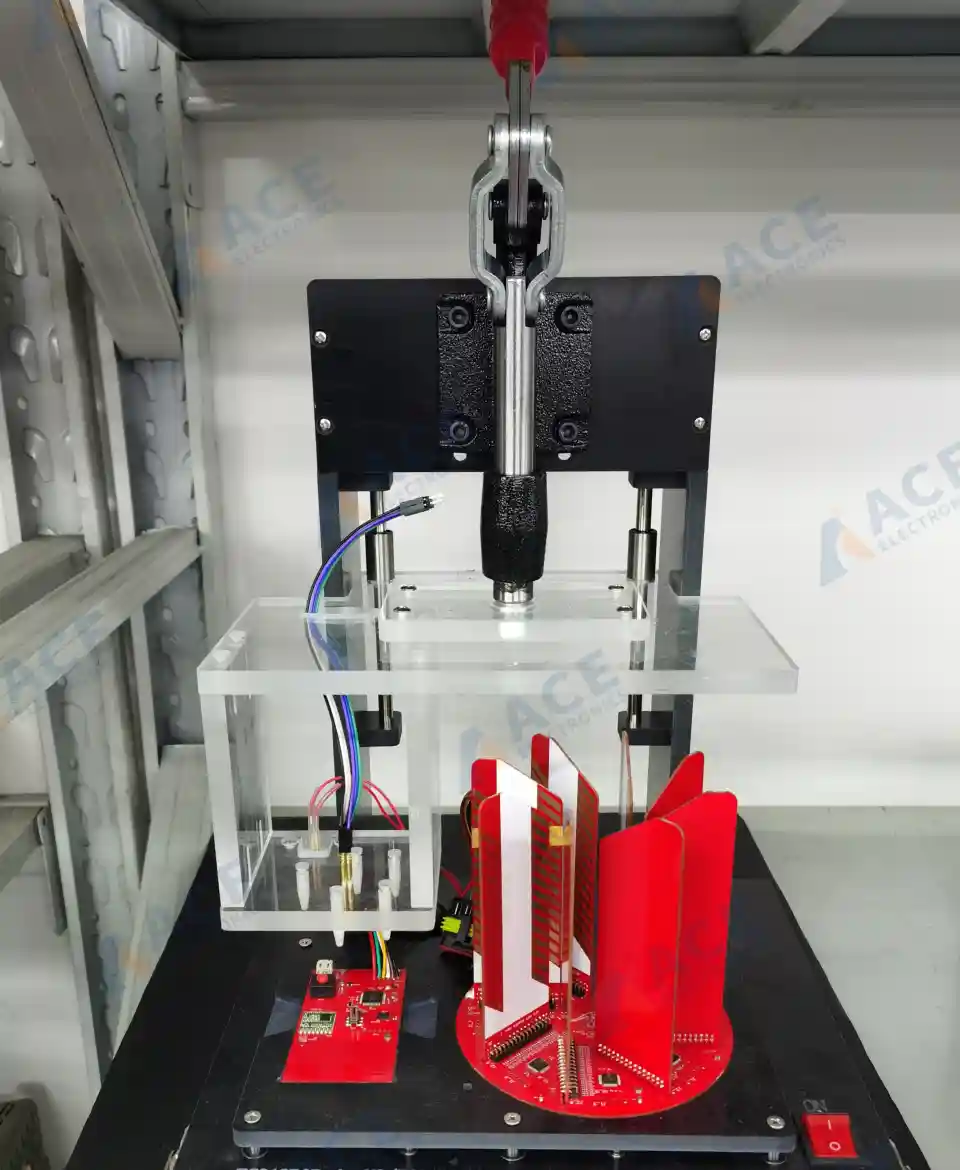
Custom functional test fixture built for the updated Gen 2 PCB design and test requirements, helping improve test consistency before volume production.
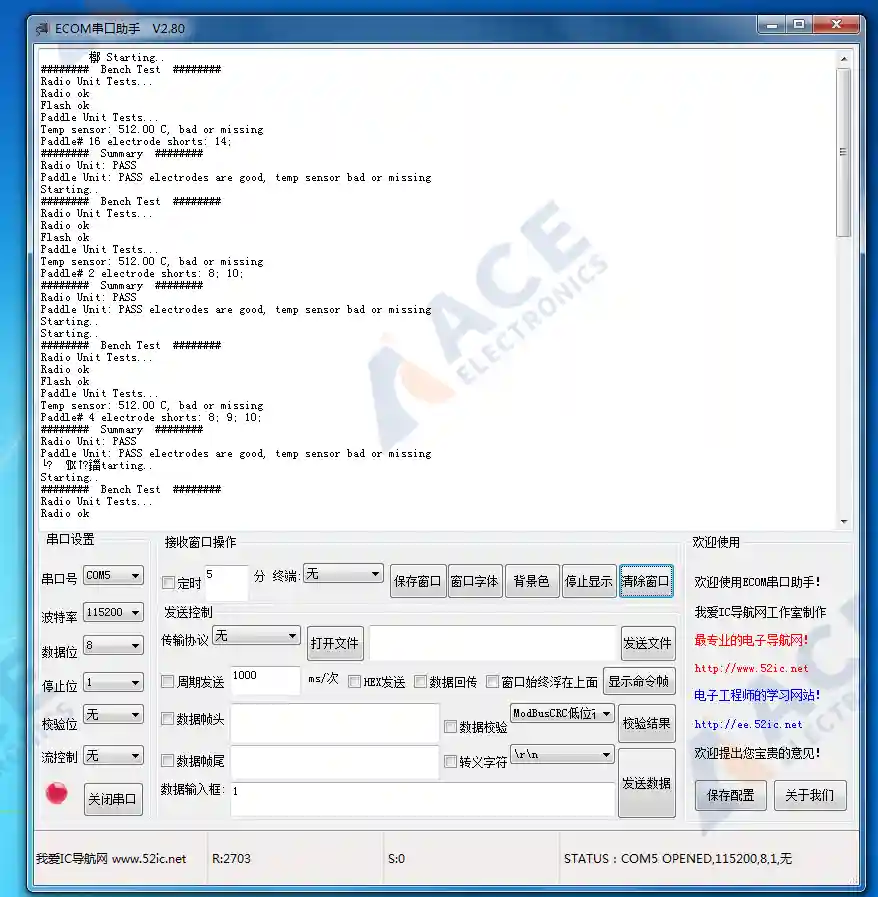
Engineering validation log used to reproduce known fault conditions and confirm that the test fixture could detect missing sensors, electrode shorts, and radio module status before mass production testing.
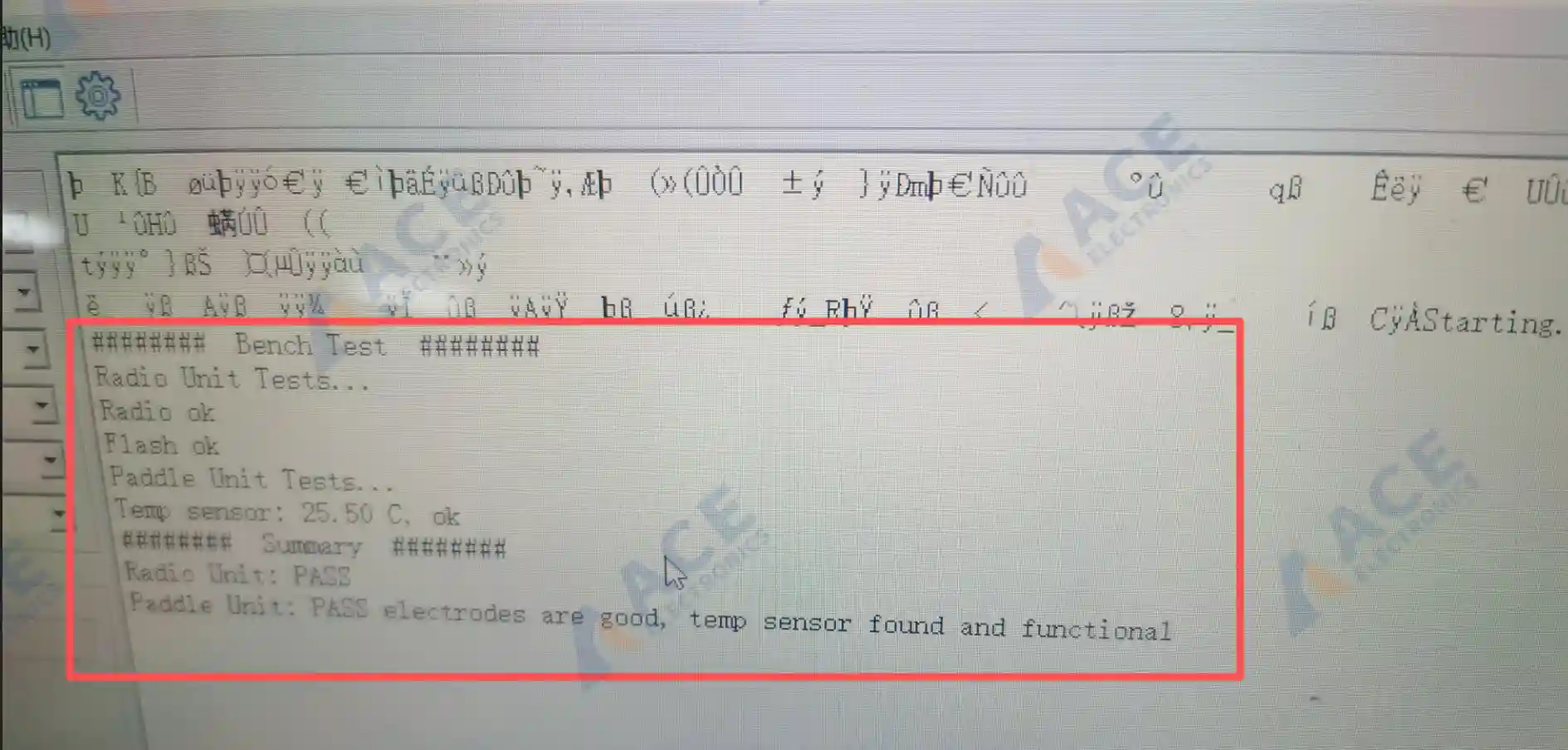
Functional test output showing PASS results for the radio unit, flash memory, electrodes, and temperature sensor after the test setup was verified.
Polyurethane Conformal Coating and Waterproof Connectors Wire Harness
The polyurethane conformal coating specification did not change. Gen 1 had proven polyurethane held up in moist agricultural soil across temperature swings, fertilizer exposure, and full-season deployments. There was no reason to switch materials or methods — immersion dipping, connector masking, and UV inspection were repeated exactly.
The TE waterproof connector series stayed the same for the same reason: zero field failures across 2000 units is the best evidence you have that a component choice and assembly process were correct.
Export Packaging for the Red RootTracker PCBA
For this production of PCB Assembly project, we upgraded the export packaging to 5-ply BC-flute corrugated cartons, approximately 6–7 mm thick, using heavy kraft liners for better compression strength during ocean freight. Inside the carton, we used custom die-cut corrugated dividers to separate each probe module and hold the arrow-board geometry in place. This avoided loose movement inside the carton and helped protect the assembled PCBs during shipment.
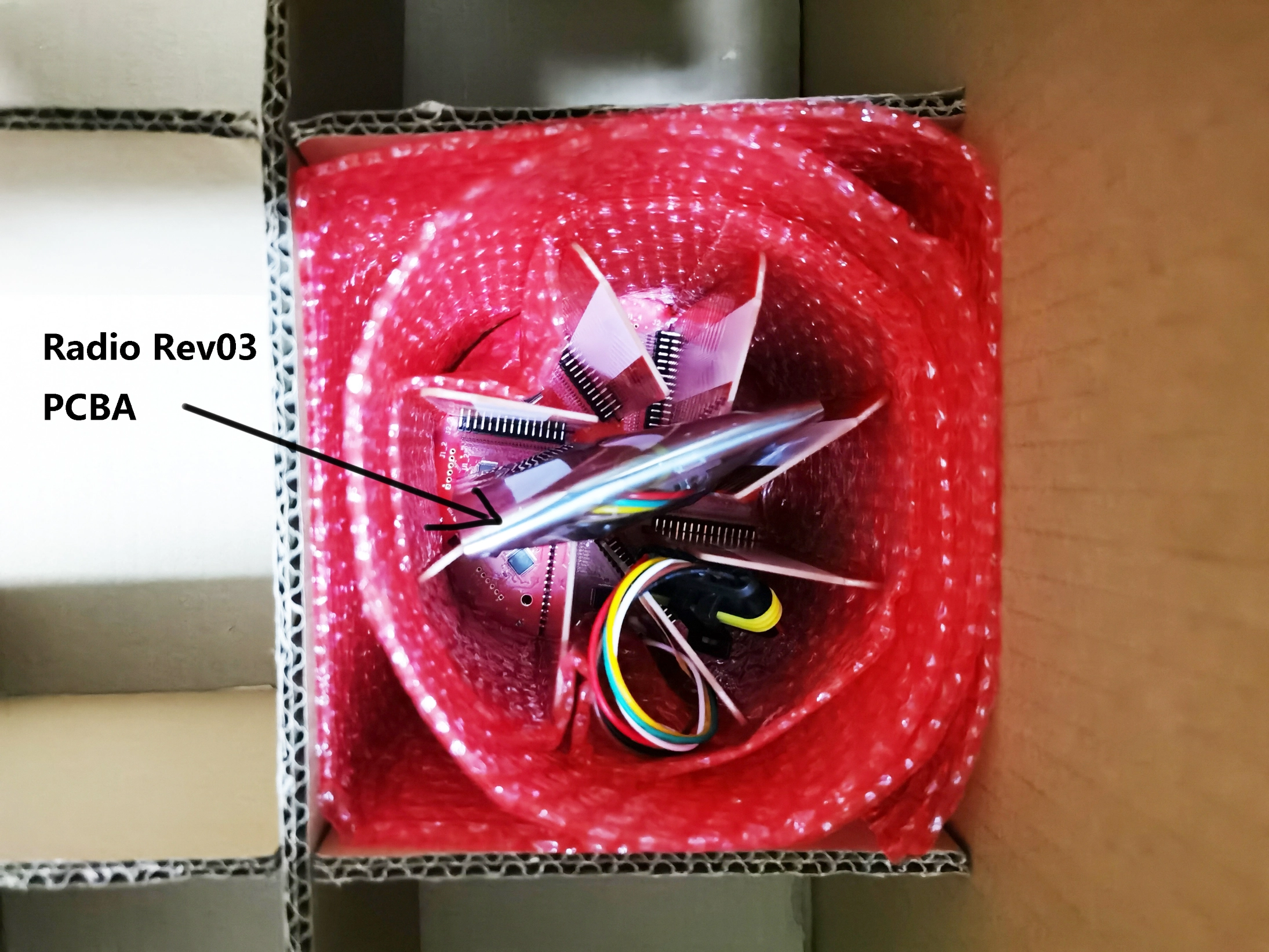
Individual PCBA protected inside the export carton to reduce movement and protect the vertical sensing boards and connector interfaces during shipment.
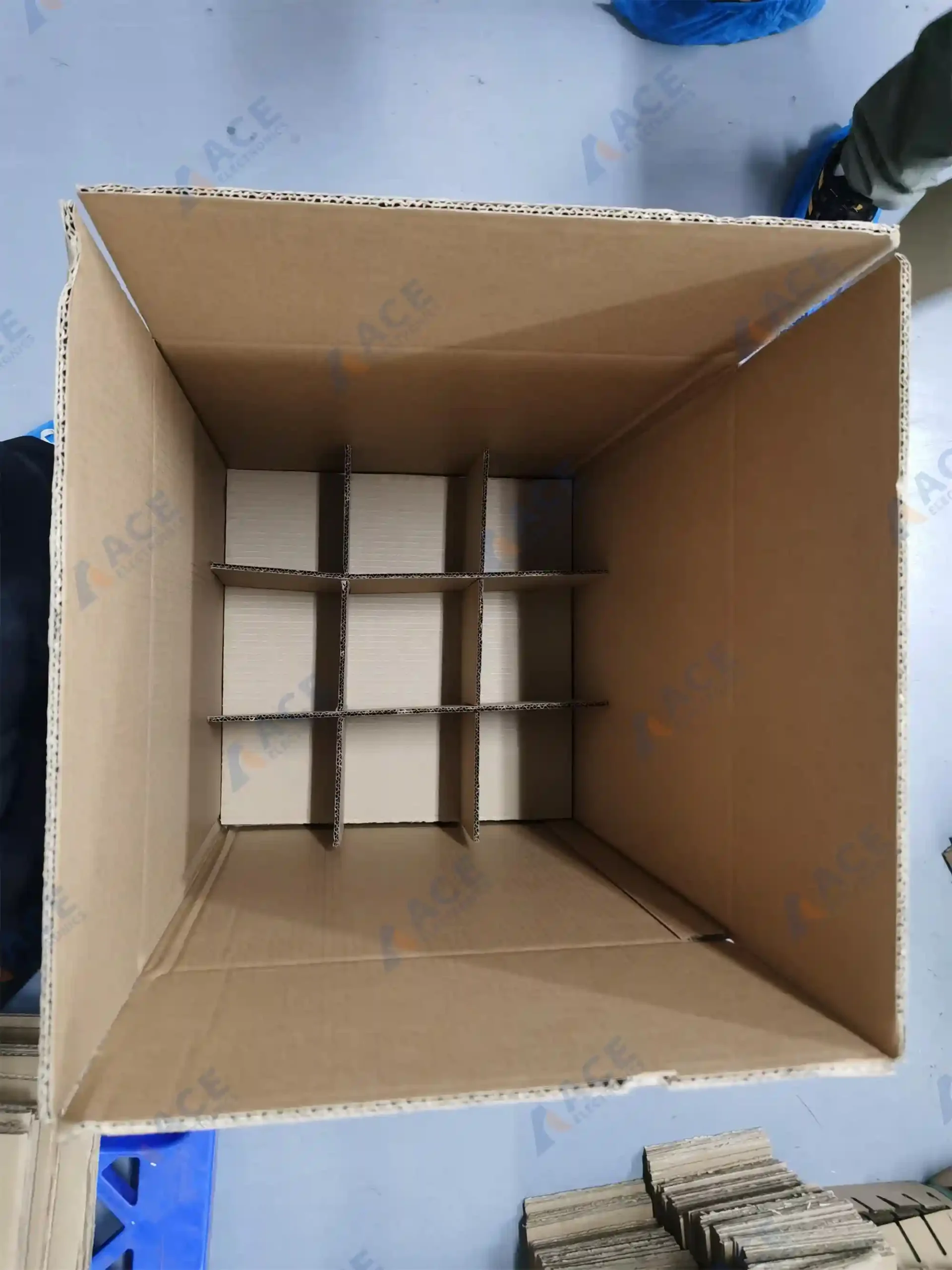
5-ply BC-flute corrugated export carton with die-cut internal dividers, designed to separate and protect each assembled probe module during ocean freight.
What This Means for Similar Agricultural Electronics Projects
This case is relevant for agricultural sensor manufacturers, outdoor IoT device companies, and research equipment developers that need to move from prototype validation to repeatable volume production.
The main manufacturing challenges are not only PCB assembly. They also include moisture protection, connector reliability, firmware loading, functional test coverage, cable harness quality, and export packaging. Handling these steps under one manufacturing workflow reduces handoff risk and makes batch-level traceability easier to maintain.
If your electronics project needs the same thing — a manufacturing partner who can handle PCB assembly, conformal coating, component sourcing, firmware programming, custom cable harnesses, and export packaging through design iterations and volume growth — send us your BOM and Gerber files.
Frequently Asked Questions
Do you offer firmware programming for microcontrollers during PCBA?
Do you offer firmware programming for microcontrollers during PCBA?
Yes. For this project, we loaded the client's .hex file onto each Microchip PIC MCU before SMT assembly, configured the fuse settings to specification, and verified each chip with a post-programming checksum. The programming result was logged per serial number for traceability. If your project requires firmware loading — whether Microchip PIC, Atmel, STM32, or other MCU families — include the .hex file and configuration requirements with your BOM.
What conformal coating do you recommend for outdoor agricultural electronics?
What conformal coating do you recommend for outdoor agricultural electronics?
For devices that spend weeks or months buried in moist soil, we recommend polyurethane conformal coating applied by immersion dipping. Polyurethane offers stronger moisture and chemical resistance than acrylic, handles thermal cycling well, and the dip process achieves coverage into under-component crevices that spraying can miss. The right coating depends on your specific operating environment — we review this during the DFM stage.
Can you source Microchip PIC microcontrollers at better pricing than I can get independently?
Can you source Microchip PIC microcontrollers at better pricing than I can get independently?
In many cases, yes — and this project is an example. Because we purchase PIC MCUs across multiple client projects, our aggregate volume with authorized distributors often unlocks pricing tiers that a single-project buyer cannot reach independently. On this 4000-unit order, we secured per-unit PIC pricing below the client's independent quotes. The same applies to TE connectors, passives, and other commodity components.
How do you handle testing for volume production runs?
How do you handle testing for volume production runs?
We build custom functional test fixtures, according to client test requirement which is in order to speed up the testing and help client reduce labour cost.
Can you manufacture agricultural sensor PCBAs from prototype to volume production?
Can you manufacture agricultural sensor PCBAs from prototype to volume production?
Yes. We can support agricultural electronics projects from prototype and pilot runs to volume PCBA manufacturing. The scope can include PCB fabrication, component sourcing, SMT and through-hole assembly, firmware programming, conformal coating, wire harness assembly, functional testing, and export packaging.
Have a project ready for manufacturing?
Fill out the form below and our engineering team will get back to you within 24 hours.