
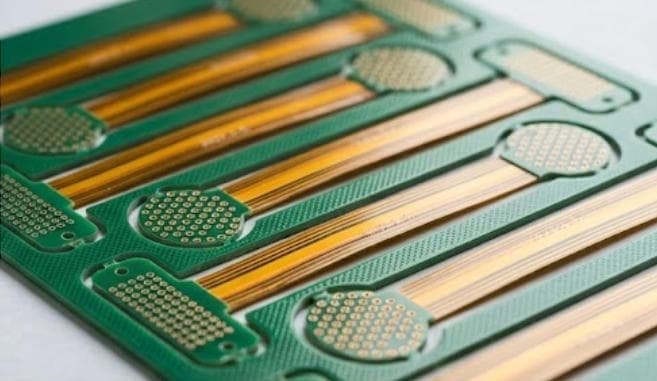
Rigid-flex PCBs1 are powerful, but their high cost can strain your project budget. This forces painful compromises. But what if you could significantly cut costs without losing performance?
The key to cost-effective rigid-flex boards is making smart decisions early. About 60% of the final cost is locked in during the design stage. By focusing on design, manufacturing, and project management, you can achieve major savings without compromising the quality of your final product.
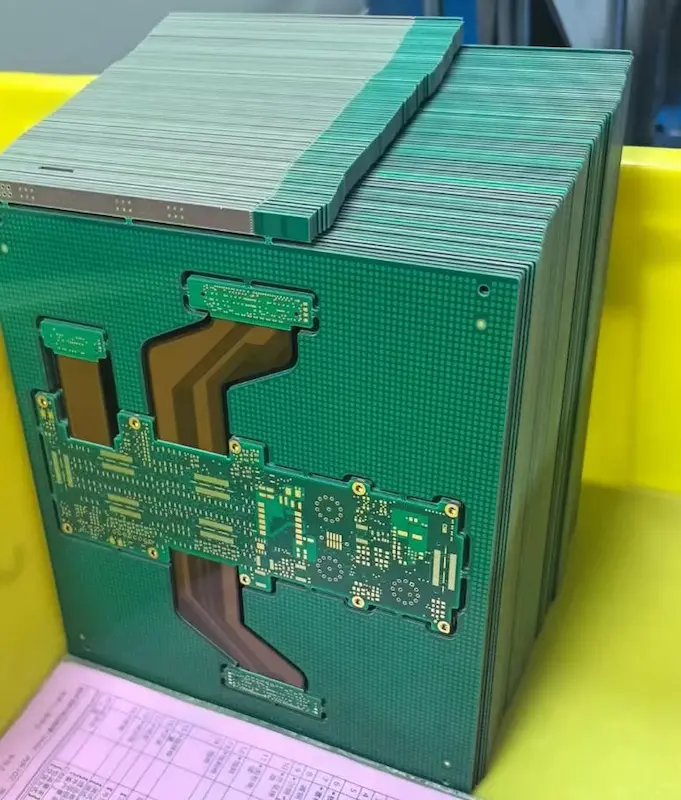
I often hear from clients that the 3x to 5x price premium for rigid-flex boards feels like an unavoidable tax on innovation. But in my 15 years of experience in electronics manufacturing, I've seen firsthand that this isn't true. The biggest cost drivers are often hidden in plain sight, decided long before the board ever reaches our production line. The good news is that you have more control over the final price than you think. Let's break down exactly where you can find these savings, starting with the most critical phase of all: your design.
How can you slash costs during the design stage?
Your design choices feel permanent, and every tweak seems to add cost. You worry that optimizing for price means sacrificing your board's functionality and long-term reliability.
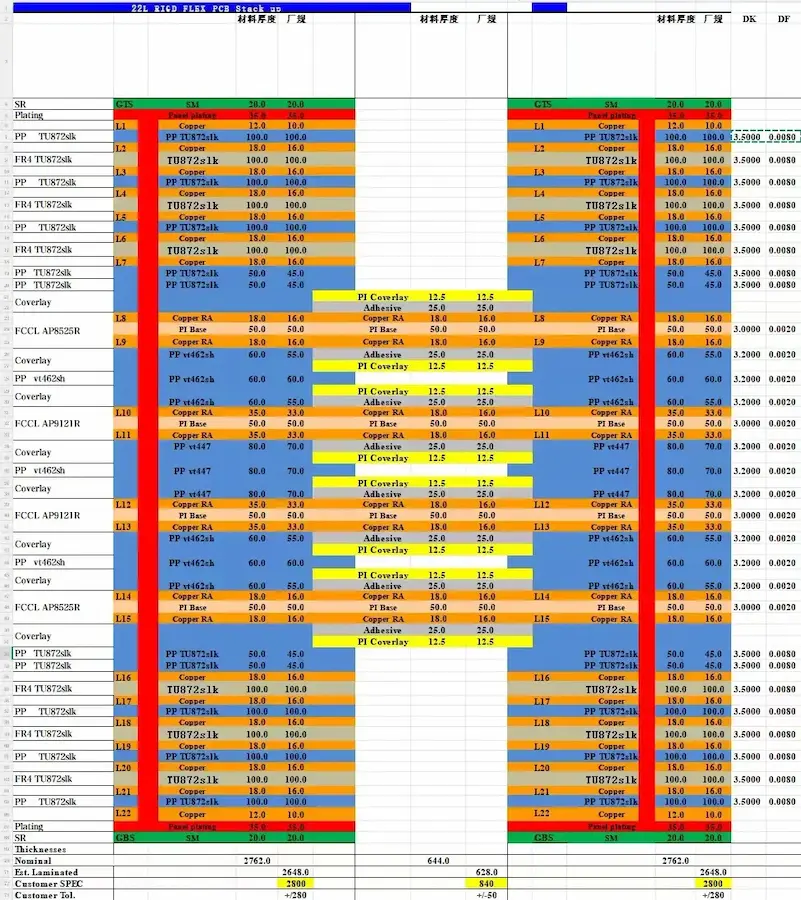
Focus on strategic design optimizations that have the biggest impact. This includes refining your layer stackup2, enforcing a symmetrical structure3, minimizing the flexible area4, and avoiding unnecessarily tight tolerances5 on non-critical features.
Over the years, I've seen countless designs where small, early adjustments could have saved thousands of dollars in production. The design stage is your single greatest opportunity for cost reduction. A rigid-flex board is not just a circuit; it's a mechanical component, and its physical structure dictates a huge portion of the manufacturing cost. Let's dive deeper into specific actions you can take.
Tweak Your Layer Stackup
The first question I always ask a client is, "Do you truly need all those layers?" For example, moving from a 6-layer to a 4-layer design can offer massive savings. This often means a 25-30% reduction in raw material costs and a 15% cut in processing time because it eliminates an entire lamination cycle. Sometimes, a 4-layer High-Density Interconnect (HDI) structure can achieve the same electrical performance as a 6-layer standard board.
| Design Approach | Key Benefit | Typical Cost Impact |
|---|---|---|
| 6-Layer to 4-Layer | Reduced material and lamination6 cycles. | 25-30% material cost reduction. |
| Symmetrical Stackup | Prevents board warp during heating. | Improves manufacturing yield, lowers scrap rate. |
| Minimize Flex Area | Polyimide7 (flex material) is expensive. | Directly cuts raw material costs. |
Enforce Symmetry and Reduce Flex Area
Manufacturing processes involve heat, and asymmetrical board structures tend to warp. This is a common cause of yield loss. By designing a symmetrical stackup, you make the board inherently more stable, which makes our job easier and your price lower. Also, take a hard look at the flexible sections. Is all that area necessary? The flexible polyimide material is significantly more expensive than standard FR-4. Shrinking "non-essential" flex zones is a direct and easy way to cut material costs. Just be sure to leave enough room for proper bending and routing.
Be Smart with Tolerances and Features
Not every dimension on your board needs a +/- 0.05mm tolerance. I recently worked with a client on a robotics project where they specified extremely tight tolerances across the entire board. After a review, we found that only 10% of those dimensions were truly critical for function. By relaxing the tolerances on non-critical areas, we simplified the manufacturing process and improved the yield, saving them nearly 20% on the final unit price. The same logic applies to features like "rigid islands" in flex areas. Each one adds process steps and complexity. If they aren't essential, reducing their number is a smart cost-saving move.
What manufacturing choices can lower your final bill?
You've sent your design to the fab house, feeling powerless over the final cost. Unforeseen manufacturing issues can lead to delays, rework, and serious budget overruns.
You can guide the manufacturing process to be more efficient. Prioritize mature and stable process routes, always validate with prototypes before mass production, and consolidate processing steps to reduce setup times and complexity.
Once your design is finalized, your influence over cost doesn't end. How the board is actually made plays a huge role in the final price. Partnering with a manufacturer who is transparent about their processes is key. At ACE Electronics, we always try to align our manufacturing strategy with the client's budget and volume needs. It’s a collaborative effort. Here are some of the most effective strategies we use with our partners.
Stick to Proven Processes
Every manufacturer has a set of standard, high-yield processes they have perfected over thousands of production runs. Deviating from these "golden" processes to use a novel or highly complex technique almost always introduces risk and cost. Experimental methods often have lower yields, require special handling, and can lead to unpredictable results. For a motor controller project with a client from Italy, we recommended sticking to our standard high-voltage board process instead of a more exotic one they had proposed. This choice alone ensured a 99%+ yield and kept the project on budget. Always ask your manufacturing partner what their most stable and mature process is for your type of board.
Prototype First, Then Scale
The single most expensive mistake you can make is discovering a flaw after committing to a large production run. A small batch of prototypes is your best insurance policy. This allows you and the manufacturer to validate every aspect of the design, from the layer stackup to the component fit and the flex circuit's bend radius. I remember a smart payment terminal project where the prototype run revealed a potential stress point in the flex ribbon. Fixing it in the design file was simple. Finding it after producing 10,000 units would have been a disaster. A pilot run confirms the process is stable and allows you to scale up with confidence.
Consolidate and Standardize
Complexity is the enemy of low-cost manufacturing. The more unique materials and process steps your board requires, the more it will cost. We work with clients to standardize where possible. For example, can you use a single type and thickness of polyimide across all your rigid-flex projects? This allows us to buy material in bulk and pass the savings to you. Similarly, look at consolidating machine operations. Reducing the number of different drill sizes or combining separate laser cutting and routing steps into a single, more efficient path minimizes machine setup time and operator intervention.
How does smart project management cut down rigid-flex expenses?
Communication gaps between your design team and the manufacturer often lead to costly mistakes. Last-minute changes and poor planning can derail your timeline and inflate your budget.
The best strategies are proactive ones. Conduct a Design for Manufacturability (DFM)8 review as early as possible, freeze the design before production, and work with your partner to optimize the panel layout for maximum material utilization.
Before moving to the next phase, run your design through our Rigid-Flex PCB DFM Cost-Reduction Checklist to catch costly oversights early.
The final piece of the cost-reduction puzzle is project management. This is about communication, planning, and foresight. Many of the most expensive problems with rigid-flex boards can be identified and solved with a simple conversation before a single piece of material is cut. This is where a strong partnership with your EMS provider becomes invaluable.
The Power of an Early DFM Review
A Design for Manufacturability (DFM)8 review is a formal check where we, the manufacturer, analyze your design from a production perspective. The earlier this happens, the better. A DFM review can spot critical cost drivers that are easy to fix in the design stage but expensive to deal with in production.
| DFM Checkpoint | Common Issue Found | Cost Impact of an Early Fix |
|---|---|---|
| Panel Utilization | Low number of boards per panel. | High: Directly lowers per-unit cost. |
| Flex Zone Routing | Traces too dense, sharp bends. | Medium: Prevents cracking, improves yield. |
| Transition Zone | Components too close to bend area. | Medium: Avoids assembly failures. |
| Layer Stackup | Unnecessary layers or materials. | High: Major savings on material and processing. |
We often find issues like poor panel utilization9, routing in flex zones that is too dense and risks cracking, or component placement that will cause issues during assembly. For one of our long-term partners in the US, we run a DFM check on every new design. It has become a standard part of their workflow and consistently saves them from costly revisions down the line.
We run these DFM checks at no charge for new partners because we've seen too many projects go sideways over fixable issues like trace density in flex zones or poor panel utilization. Upload your design files here and we'll return a detailed DFM report within 48 hours—typically identifying 3 to 5 specific actions that can reduce your unit cost by 15% or more.
Minimize Mid-Project Design Changes
Once you give the green light for production, we start ordering materials and creating the specific tooling for your board. A design change at this point is incredibly disruptive and expensive. It can mean scrapping materials, remaking tools, and resetting production schedules. The best practice is to treat your design as "frozen" once it's been submitted for mass production. All validation and changes should happen during the prototyping and DFM stages. This discipline is crucial for keeping your project on time and on budget.
Optimize Panelization and Grade Your Requirements
Rigid-flex boards are manufactured on large panels. The more boards we can fit onto a single panel, the lower your per-unit cost will be. This is called the "utilization rate." We can often help optimize the board's shape or arrange it more efficiently on the panel to maximize this rate. Furthermore, not every part of your board needs to meet the absolute highest specification. You can "grade" your requirements. Perhaps the main rigid section needs tight tolerances, but a simple flex tail for a connector does not. Applying the highest spec everywhere is a common source of unnecessary cost. We can help you identify which areas can use standard tolerances without impacting performance at all.
Conclusion
Reducing rigid-flex cost is achievable. Focus on smart design choices, efficient manufacturing, and proactive project management to get high-quality boards without breaking your budget.
+++FAQ+++
How can I save the most money during the design stage?
Focus on four things: use fewer layers if possible, keep the bendy/flexible parts small, make the board symmetrical (same layers on both sides), and don't ask for extreme precision on parts that don't need it. About 60% of your final cost is locked in during design, so simple choices here make the biggest difference.
Will using fewer layers hurt my product's performance?
Not always. Sometimes a well-designed 4-layer board works just as well as a 6-layer one. Fewer layers means less material and fewer production steps, which saves 25-30% on costs. Ask your manufacturer if a simpler design can meet your needs.
What are "tolerances" and why do they affect price?
Tolerance means how precise the measurements must be. If you ask for extreme precision (like +/- 0.05mm) on every part of the board, it makes manufacturing harder and slower. Only ask for tight precision on the small parts that truly matter for your product to function.
How can I avoid expensive mistakes during manufacturing?
Always make a small test batch (10-20 pieces) before ordering thousands. This catches problems early when they're cheap to fix. Also, stick to standard manufacturing methods your supplier knows well, rather than asking for new or experimental techniques that might fail.
What is a DFM review?
DFM means "Design for Manufacturing"—it's an early check where the manufacturer reviews your design to see if it's easy to build. They might suggest changing the board shape to fit more pieces on one panel, or moving parts away from bend areas. Doing this check early prevents costly fixes later.
Why can't I change the design once production starts?
Once you give the green light for mass production, the factory buys materials and creates special tools just for your board. Changing the design at this point wastes those materials and requires remaking the tools. This causes delays and costs a lot of money. Make sure your design is final before mass production begins.
+++FAQ+++
Explore the advantages of Rigid-flex PCBs to understand their value in modern electronics. ↩
Understand the importance of layer stackup in PCB design and how it affects costs. ↩
Find out how a symmetrical structure can enhance PCB stability and reduce costs. ↩
Learn techniques to minimize flexible areas in PCBs to cut costs effectively. ↩
Explore how tight tolerances can impact manufacturing costs and yield. ↩
Understanding the lamination process can reveal cost-saving opportunities in PCB design and manufacturing. ↩
Explore this resource to understand how polyimide enhances performance and cost-effectiveness in rigid-flex PCBs. ↩
Explore the concept of DFM and how it can help reduce costs in PCB projects. ↩
Learn strategies to optimize panel utilization and lower per-unit costs in PCB production. ↩