
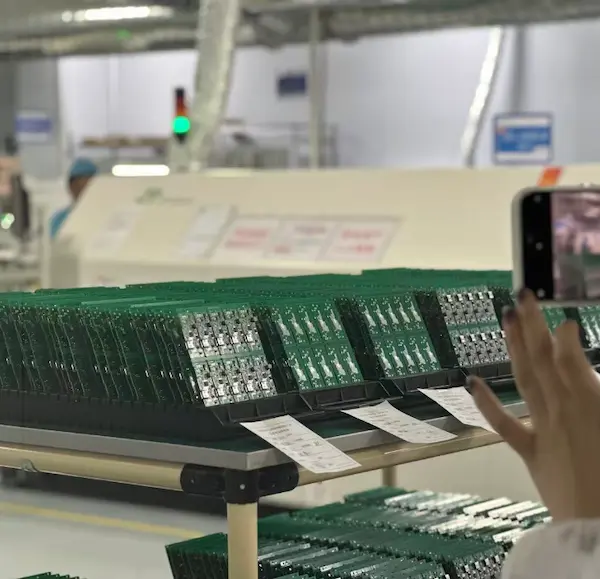
This case study shows how ACE Electronics supported a fixed wireless payment terminal project with a full turnkey PCBA service. The scope covered PCB fabrication, component sourcing, PCBA, firmware flashing, functional testing, acrylic conformal coating, QR serial labels, custom wire harnesses, custom injection-molded housings, and export packaging.
Over about 8 years, the project moved from prototype-stage builds to repeat production of more than 10,000 units per year. The main value of the turnkey model was simple: it kept many connected steps under one managed flow. That helped reduce supplier handoffs, improve traceability, and make repeat delivery easier for the customer team to manage.
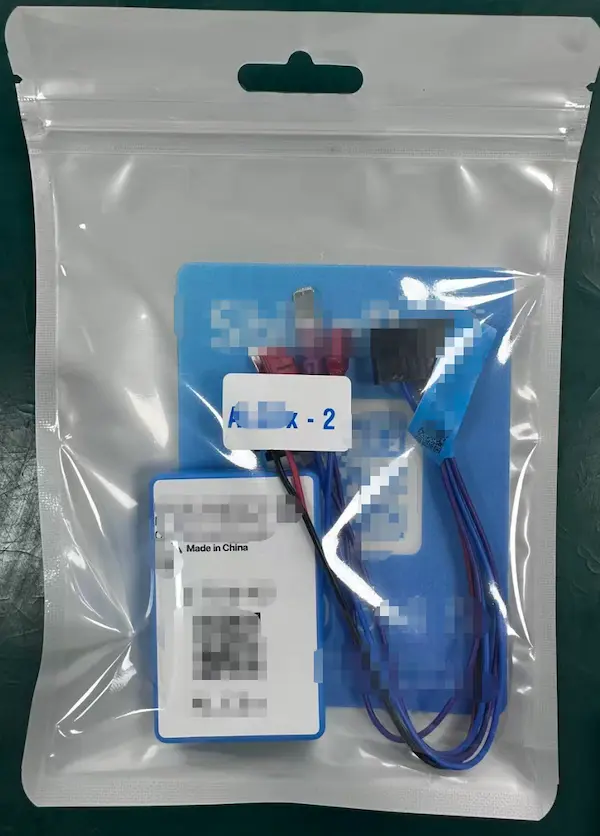
Completed fixed wireless payment terminal showing UV-resistant QR label, custom wire harness integration, and acrylic conformal coating on PCB assembly.
Project Snapshot
| Item | Details |
|---|---|
| Customer | Anonymous U.S. customer (covered by NDA) |
| Product | Fixed wireless payment terminal |
| Cooperation length | 8 years |
| Annual demand | 10,000 units |
| Scope | PCB fabrication, component sourcing, PCBA, firmware flashing, UV-traceable acrylic conformal coating, QR serial labels, UV-resistant PVC QR labels, 20 custom wire harness variants, injection-molded housings, packaging, sea shipment |
| Core challenge | Keeping QR traceability, harness identification, humidity protection, and export packaging aligned in one delivery flow |
| Business value | Stable repeat production, smoother delivery, controlled rework, fewer supplier coordination points, and a shorter path from prototype stage to long-term production |
Manufacturing Standards and Specifications
| Parameter | Specification | Application |
|---|---|---|
| Conformal Coating Material | UV-traceable Acrylic | Humidity protection for component areas |
| Coating Thickness | 25–50 µm | Typical range for payment terminal PCBA |
| Label Standard | UV-resistant PVC QR | Long-term outdoor/indoor traceability |
| Harness Identification | QR P-type labels | 20 variant differentiation |
| Packaging Standard | Export-grade carton + moisture barrier | Sea shipment protection |
| Quality Systems | ISO 9001, IATF 16949 | Internal Process control and traceability |
Is This Case Useful for Your Project?
This case may be useful for companies making payment terminals, kiosk devices, access control products, wireless controllers, and other electronic products that need more than basic PCB assembly.
If your product includes many connected production steps, and your team spends too much time working with different suppliers, a turnkey PCBA model can be a better choice. It helps keep the whole process clear and organized.
Why This Project Needed our Turnkey Assembly Service?
This project was not difficult because of one special PCB problem or one hard enclosure part. The real challenge was managing many connected steps.
The product needed serial-number QR labels to stay in the right order. It also had about 20 harness types, and they could easily be mixed up during assembly if the marking was not clear. The boards also needed better protection after field feedback showed that long-term humidity might affect reliability. Packaging was important too, because it had to work for sea shipment, not just for factory storage.
When too many suppliers handle these steps separately, small mistakes can quickly become bigger problems. Labels may get out of order. Similar harnesses may be mixed up during assembly. A board may pass factory testing but still face moisture risk later in real use. Packaging may look fine at final inspection but still not be good enough for export shipping. That is why a one-stop assembly service worked better for this project.
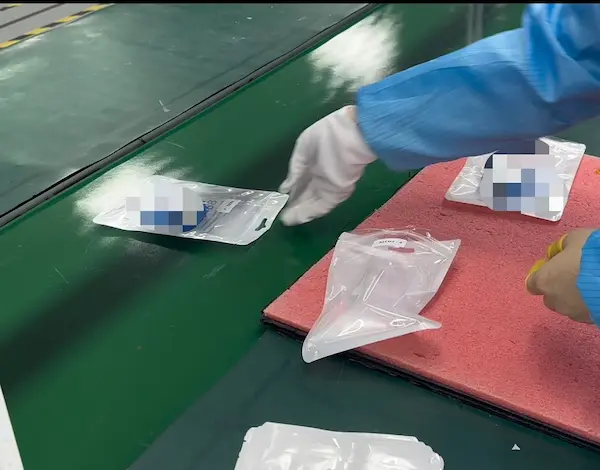
Box-build assembly stage where injection-molded housings, 20 variants of custom wire harnesses, and conformal-coated PCBAs are integrated into finished units. The line operates under documented ISO 9001 controls to prevent mix-ups during high-mix assembly.
Main Manufacturing Challenges
1. QR code control depended on sequence, not only print quality
One of the most important issues in this project was QR code printing and serial-number sequence control. The labels had to be prepared in the correct order before delivery, and each label had to be matched to the correct unit during final assembly.
Once sequence control breaks, traceability becomes unreliable very quickly.
To reduce that risk, we treated label handling as part of the assembly process, not as a simple printing task. We requested our cooperated label supplier, that all incoming labels had to stay in sequence, and final assembly followed a one-to-one matching rule at the unit level.
This improved traceability and made later production runs easier to control.
2. The harnesses needed clearer identification before scale-up
The project included about 20 custom harness variants. In the early low-volume stage, those harnesses did not initially carry clear model labels. Several harnesses looked similar, which made mix-ups more likely during assembly.
That risk did not only slow the assembly line. It also increased the chance of rework, wrong-unit installation, and confusion during line-side handling.
To solve that, we proposed adding QR P-type labels with serial information directly onto the harnesses. That gave each harness a clearer identity and made the assembly flow easier to control.
The result was better harness-level traceability and a lower risk of assembly mix-ups as the project moved into stable repeat production.
3. Humidity exposure required a defined board-protection step
At the small-batch stage, some devices were reported as not working in actual use. Based on our communication with the customer, we concluded that long-term exposure to high-humidity environments was a likely contributing factor.
The risk was clear: a board could pass testing during production and still have reliability problems later in the field.
Our suggestion to client is adding UV-traceable acrylic conformal coating to the PCB after SMT and DIP assembly. The target thickness was about 25-50 um, with the goal of protecting the component area from high humidity exposure.
4. Packaging had to be designed for sea shipment
Packaging was also an important part of this project. Standard packaging was not enough for export shipping.
The main risk was damage during transport or moisture exposure during sea shipment, even if the products had already passed inspection.
To reduce that risk, we used export cartons made from 5-7 mm imported kraft corrugated board. We also added paper dividers to keep the units in place and a large plastic liner bag inside each carton to help reduce moisture during sea shipment.
As a result, the packaging was prepared for actual shipping conditions, not only for storage inside the factory.
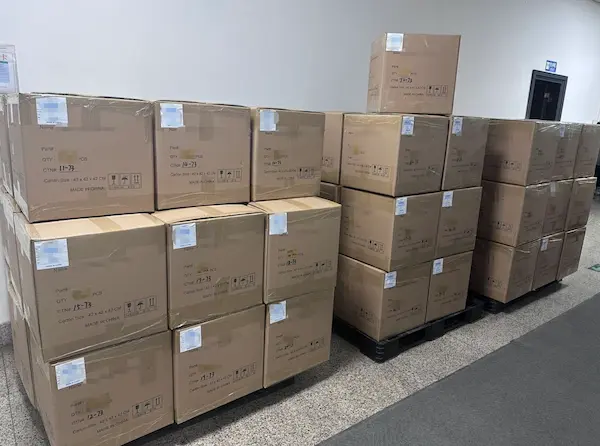
Shipment staging area showing stacked export cartons for a 10,000-unit annual delivery. Each pallet is configured for sea freight efficiency, with moisture barriers and impact-resistant dividers validated for long-distance logistics.
How We Managed the Project Production
In this project, PCB fabrication, component sourcing, PCBA, firmware flashing and functional testing, label work, wire harness management, housing injection, conformal coating, and packaging were all managed together at our facility as one project-flow.
Some steps were done in our own production process. For some outside parts or services, we worked with approved suppliers or our cooperated suppliers, and checked them under clear inspection rules. This made the whole process easier to control.
As a result, the customer had one clear delivery plan instead of having to manage each production step separately.
Our Turnkey Delivery Workflow
We coordinated the full delivery chain through one connected workflow:
- PCB fabrication with controlled revision alignment
- Component sourcing to keep the BOM and supply plan synchronized
- PCBA and firmware flashing / functional testing within our internal production flow
- QR serial label control for finished-unit traceability
- UV-traceable Acrylic conformal coating after application review identified humidity as a likely field-use risk
- Custom wire harness coordination across 20 harness variants
- Injection-molded housing coordination for final product assembly
- Packaging and shipment release for export delivery
Request a Free Manufacturing Feasibility Review
Several Suppliers vs. One-Stop: Risk Comparison
| Risk Scenario | Multi-Supplier Approach | One-Stop Delivery |
|---|---|---|
| QR Label Sequence Error | Higher handoff risk between printing, delivery, and final assembly | Controlled through incoming sequence checks and final assembly matching |
| Wire Harness Mix-Up | Similar-looking harnesses are easier to confuse during assembly | Reduced risk after QR P-type labels were added before scale-up |
| Humidity Reliability | Protection decisions may be delayed until after field problems appear | Acrylic conformal coating added after application review as a defined process step |
| Export Packaging Failure | Packaging may be separated from actual shipment conditions | Packaging designed around sea-shipment handling and moisture exposure |
| Traceability Gap | Labels, harnesses, and final assembly are easier to manage as separate records | Tighter traceability control across unit labels, harness identification, and final assembly |
What Our Client Gained from our One-stop Assembly Service
By managing PCB work, sourcing, assembly, coating, harness handling, and packaging together, the project brought several clear benefits:
- Less supplier coordination — the customer worked with one managed process instead of many separate suppliers
- A smoother move from prototype to production — the project grew over 8 years from small batches to about 10,000 units a year
- Better traceability — QR code control for both units and harnesses helped reduce assembly mix-ups
- Better packaging for export shipment — the packaging was designed for sea transport, not just factory storage
- More stable quality control — ISO 9001 and IATF 16949 helped support process control as production volume increased
Evaluate Your Project for Turnkey Delivery
Consider a turnkey model if your product matches three or more criteria:
- [ ] Product includes 5+ manufacturing stages (PCB → Assembly → Flashing → Mechanical → Packaging)
- [ ] Annual volume is scaling from prototype (≤100 units) to production (≥5,000 units)
- [ ] Traceability requirements (serial numbers, QR codes) must be maintained across multiple components
- [ ] Field-use environment includes humidity, temperature cycling, or mechanical stress
Feel free to Send Your BOM/ Gerber/ assembly requirements for manufacturing review
We do not just assemble boards. We control the full manufacturing chain for products that become hard to manage once labeling, harness variants, coating, housing, and export packaging all need to stay aligned.
Conclusion
For this fixed wireless payment terminal project, the main challenge was not the PCB alone. The harder part was keeping labels, harnesses, housings, coating, and export packaging aligned as one manufacturable project.
That is why the turnkey model worked. Over about eight years, it helped the project move from prototype-stage support to repeat production of around 10,000 units per year with tighter traceability, better process control, and fewer supplier handoff problems.
If you are planning a payment terminal or similar device and need PCB fabrication, component sourcing, programming and testing, conformal coating, wire harness assembly, and injection-molded enclosure support under one managed flow, this kind of delivery model can remove a large amount of coordination pressure before volume scales.
+++FAQ+++
What is turnkey PCBA for payment terminals?
Turnkey PCBA means one supplier manages PCB fabrication, component sourcing, assembly, programming, testing, and related subassemblies such as harnesses or housings under a single delivery plan.
Why do payment terminal projects often need conformal coating?
Payment terminals are frequently used in environments with humidity, dust, or outdoor exposure. Conformal coating helps protect PCB assemblies from moisture and environmental contamination.
What are the main risks when multiple suppliers are involved in terminal manufacturing?
Typical risks include QR label traceability gaps, cable assembly mix-ups, packaging that is not designed for export shipment, and coordination delays between PCB assembly, mechanical parts, and final product delivery.
+++FAQ+++
Author: Bill Ho, Sales Engineer & Chief Editor at ACE Electronics.
Industry Experience: 10 Years Experience in PCB Fabrication and PCB Assembly.
Have a project ready for manufacturing?
Fill out the form below and our engineering team will get back to you within 24 hours.